Waterproof means a bag keeps water out under submersion or pressure; water-resistant means it resists light rain and splashes but will leak under pressure or immersion. A roll-top dry bag is waterproof; a standard coated backpack is usually only water-resistant.
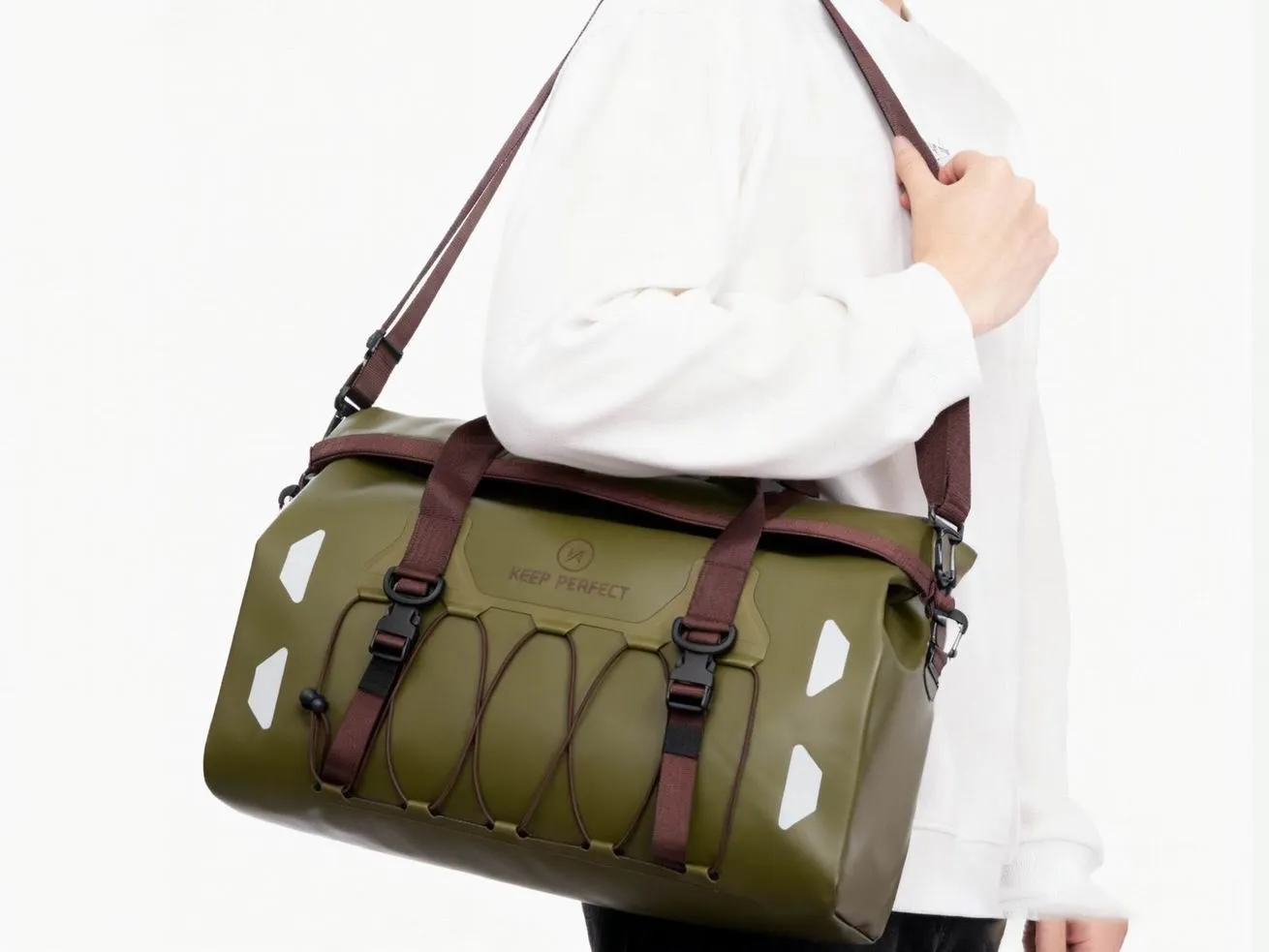
People searching for "waterproof vs water resistant" usually want a direct, practical answer - and this page delivers one. This guide explains what a waterproofing is, how it works, the materials and closures that matter, and how to choose, use and maintain one. It is a plain-English primer for anyone new to dry bags or looking to buy smarter.
The practical difference
Think of water-resistant as 'survives a drizzle', and waterproof as 'survives being dropped in the lake'. The difference is the seal: a waterproof bag has a watertight closure and welded seams, not just a coated fabric.
Why the labels confuse buyers
Many products are marketed as 'waterproof' when they are only water-resistant, because there is no universal test. Look for a stated IPX rating with test conditions to know which claim is real.
Sizes and what fits in each
A waterproofing is labeled by liters, but capacity is approximate because the roll-top eats a few centimeters of usable length. As a rule, size up for bulky gear and down for a compact packable layer.
Use 2-5L for phone and valuables, 10-15L for day trips, 20-30L for overnight gear, and 40-60L for multi-day expeditions. Match the size to the gear, not to the label.
Materials at a glance
The three main waterproofing materials are TPU, PVC and coated nylon. TPU is light, flexible and UV-stable; PVC is heavy, puncture-resistant and cheap; coated nylon is the lightest and most packable.
The material sets the cost, weight and cold-weather behavior. PVC stiffens in cold, while TPU stays flexible; nylon's coating can wear with abrasion. Choose by use case and budget rather than by marketing claims.
Key terms to know
When you shop for a waterproofing, you will see a handful of repeated terms. IPX7 and IPX8 describe waterproof ratings; TPU, PVC and coated nylon describe materials; and MOQ describes the minimum order quantity if you are buying in bulk.
Other useful terms include RF welding (fusing seams with radio frequency), watertight zipper, roll-top, D-ring, purge valve and dry sack. Knowing them makes it easier to compare products and to speak the same language as a supplier.
Common myths, corrected
A waterproofing does not have to be rolled perfectly to shed rain, but it does need three to five tight rolls to survive submersion. Another myth is that thicker film always means more waterproof - the closure and seams matter more.
Not every dry bag floats, and not every floating bag will hold heavy gear up. Treat marketing claims as starting points and verify the specific rating and buoyancy before relying on a bag in deep water.
What the term actually means
A waterproofing is a soft-sided container designed to keep its contents dry when the bag is splashed, rained on, briefly dropped in water or submerged. Unlike a standard backpack or duffel, it seals at the opening rather than relying on a fabric flap.
The two features that define a waterproofing are a waterproof body with no needle holes that leak, and a watertight closure. Everything else - straps, valves, windows and colors - is secondary to those two functions.
How to choose the right one
Start from the activity, then the size, then the material budget. Kayakers and rafters need a robust roll-top with a reliable buckle; commuters often prefer a dry bag backpack; beach and boat users may want a tote or floating bag.
If you are buying in volume for a brand, the same logic applies but is weighted by unit cost, MOQ and lead time. Fix your specification first, then compare products and suppliers on identical terms.
| Feature | Waterproof | Water-resistant |
|---|---|---|
| Submersion | Yes | No |
| Pressure jets | Yes | Partial |
| Light rain | Yes | Yes |
| Size | Typical use | Example contents |
|---|---|---|
| 2L-5L | Phone and valuables | Phone, wallet, keys, passport |
| 10L-15L | Day trips | Jacket, lunch, towel, camera |
| 20L-30L | Overnight / kayak deck | Sleeping bag, clothes, food |
| 40L-60L | Multi-day expedition | Sleep system + clothing |
| Factor | Roll-top | Zipper |
|---|---|---|
| Closure | Roll 3+ times + buckle | Watertight zipper |
| Waterproofing | Highest (IPX8 capable) | High (IPX7/IPX8) |
| Access speed | Medium | Fast |
| Cost | Lower | Higher |
| Best for | Kayaking, rafting | Deck bags, quick access |
| Question | Short answer |
|---|---|
| Is it waterproof? | Yes, when closed correctly |
| Does it float? | Usually, with trapped air |
| Best material? | Depends on use and budget |
| Right size? | Match liters to your gear |
| Lifespan? | Many seasons with care |
| Do | Don't |
|---|---|
| Roll 3-5 times | Overpack the top |
| Rinse after saltwater | Machine wash |
| Air-dry fully | Store wet |
| Test before electronics | Assume it never leaks |
The legal difference
'Waterproof' and 'water resistant' are not interchangeable, and in the EU and US they carry regulatory weight. Water resistant means the product resists some water - a few splashes, light rain - but will leak under pressure or immersion. Waterproof means it keeps water out under defined test conditions, usually an IP rating to IEC 60529.
A fabric backpack with a rain cover is water resistant. A welded TPU roll-top rated IPX6 is waterproof. Marketing a water-resistant bag as 'waterproof' is a class-action risk in the US and an advertizing-standard breach in the UK.
What IPX ratings actually mean
IPX1: dripping water. IPX3: spray at 60 degrees. IPX4: splash from any direction. IPX5: water jets at 12.5 l/min. IPX6: powerful jets at 100 l/min. IPX7: 1 meter static immersion for 30 minutes. IPX8: continuous immersion beyond 1 meter (factory-defined depth and time).
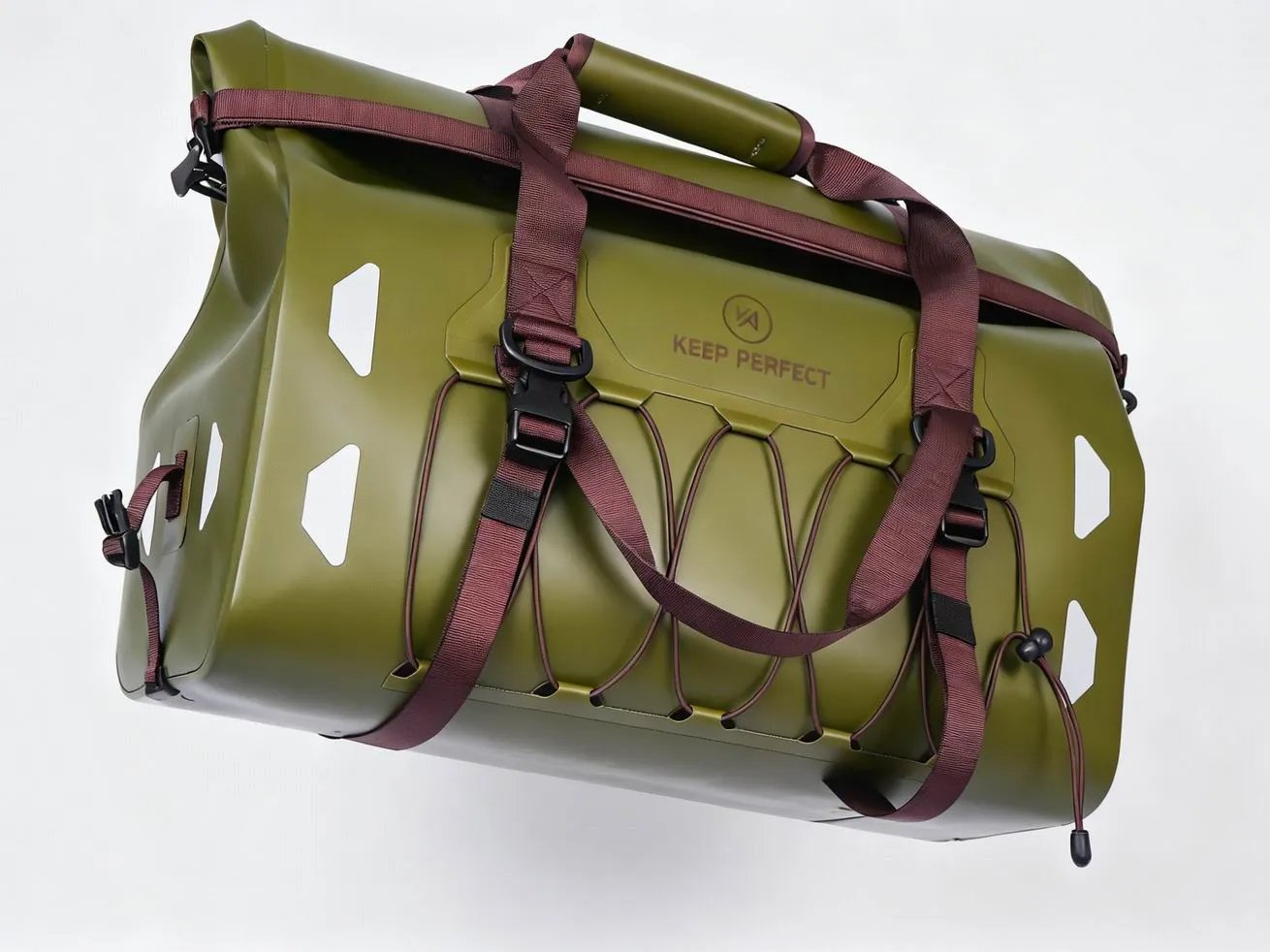
Most welded TPU roll-tops hit IPX6 (jet spray) but not IPX7 (full immersion), because a roll-top floats open under pressure. A zip-seal or clamp bag is the one that can legitimately claim IPX7. When you see 'IPX7 dry bag' on a roll-top, ask for the test report - many are IPX5 or IPX6 in reality.
How to label honestly
On a PDP, say what the bag actually survives: 'welded TPU roll-top, tested to IPX6 spray; survives brief capsizing but not prolonged submersion'. That sentence protects you from returns and chargebacks. Avoid '100 percent waterproof forever' - it is unverifiable and invites complaints.
Fabric treatments vs welded construction
A water-resistant fabric uses a DWR (durable water repellent) coating that beads water. The coating wears off after 20 to 50 washes. A welded dry bag has no DWR to wear off - the polymer itself is the barrier. That is why a dry bag stays waterproof for years while a 'waterproof' jacket re-wets after a season.
Labeling your product correctly
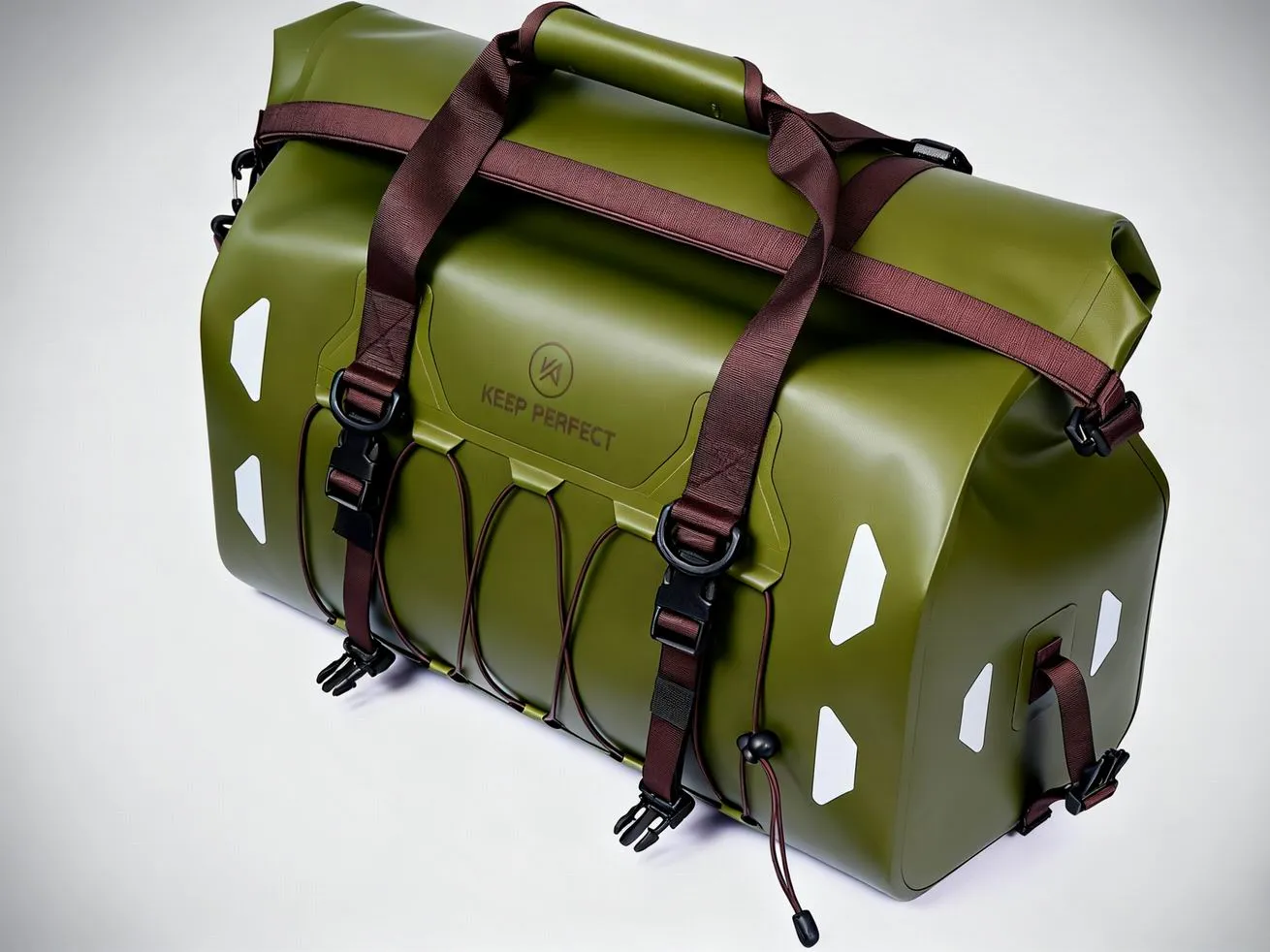
On a PDP, say exactly what the bag survives: 'welded TPU roll-top, IPX6 spray tested, survives brief capsize and rain'. Avoid '100 percent waterproof forever'. If you claim IPX7, have the lab report. Honest labeling reduces returns, chargebacks and marketplace complaints.
The difference matters at the returns desk. A customer who buys a 'waterproof' bag and finds it leaks when held underwater for 10 minutes will return it. A customer who bought an IPX6 bag knowing it is splash-rated will not. Set the expectation and the customer is satisfied.
Marketing claims that get brands in trouble
Claims that get brands delisted: '100 percent waterproof' with no rating, 'submersible to 10 meters' on a roll-top, 'dust proof' without IP6X testing. Claims that are safe: 'welded TPU, IPX6 spray tested', 'survives rain and splash', 'roll-top closure for kayak use'. Match the claim to the test.
An IPX6 roll-top survives a pressure washer from 3 meters; it does not survive being held underwater for 10 minutes. Say exactly what it survives and you avoid returns.
Honest labeling cost
Honest labeling reduces returns. A customer who buys an IPX6 bag knowing it is splash-rated will not return it when it leaks under 10 minutes of immersion. A customer who bought a '100 percent waterproof' bag will. The 30 seconds it takes to write the rating on the PDP saves 5 percent in returns.
Write the IP rating and test standard on the PDP. Avoid '100 percent waterproof forever'.
Returns reduction
Honest labeling reduces returns by 5 to 10 percent. Saying exactly what the bag survives sets expectations. A customer who knows the bag is splash-rated will not return it after a capsize. Write the IP rating on the PDP.
PDP wording
Write: 'welded TPU roll-top, IPX6 spray tested, survives rain and splash'. Avoid '100 percent waterproof forever'. Match the claim to the test. Honest wording cuts returns. For brands sourcing this spec at volume, JUNYUAN BAGS manufacturing keeps the MOQ at 500 and turns pre-production samples around in 6 to 10 days.
Labeling honestly
On the PDP, say exactly what the bag survives: 'welded TPU roll-top, IPX6 spray tested, survives rain and splash'. Avoid '100 percent waterproof forever'. If you claim IPX7, have the lab report. Honest labeling reduces returns by 5 to 10 percent.
A customer who knows the bag is splash-rated will not return it after a capsize. A customer who bought a '100 percent waterproof' bag will. Set the expectation and the customer is satisfied.
Honest labeling reduces returns. Say exactly what the bag survives. Avoid '100 percent waterproof forever'. Match the claim to the test.
The rating ladder buyers should know
Water-resistant means the bag survives splashes and light rain, tested to IPX1 to IPX4. Waterproof means it survives a spray or immersion, rated IPX5 to IPX8. IPX6 is powerful water jets from any direction; IPX7 is 30 minutes at 1 m immersion; IPX8 is continuous immersion beyond 1 m, usually 3 m for 30 minutes. A dry bag sold as waterproof should carry at least IPX6, and a phone pouch should carry IPX7. A bag labelled merely water-resistant will leak if dropped in a river, even if it handles a rainstorm.
When a supplier quotes waterproof, ask for the test method and the water depth. A factory that only inflates the bag and listens for leaks has not tested immersion; a real IPX7 report uses a vacuum chamber or a submersion tank at a defined depth. For OEM buyers, put the IPX rating and test depth on the tech pack and on the hangtag, because the difference between a water-resistant 0.3 mm bag and a waterproof 0.7 mm bag is real money at retail.
People also ask
Are dry bags safe for electronics?
Yes for water protection, but they do not protect against impact. Use a padded or dedicated electronics dry bag and test it first.
What is the difference between waterproof and water resistant?
Waterproof means it keeps water out under submersion or jets; water resistant means it resists light rain and splashes but will leak under pressure or immersion.
What is the difference between TPU and PVC dry bags?
TPU is lighter, softer and more UV-stable; PVC is heavier, more puncture-resistant and cheaper. TPU suits premium packable bags; PVC suits rugged, high-volume bags.
How are dry bags made?
The body is cut from waterproof film or coated fabric, seams are welded or taped, hardware is attached, and each bag is leak-tested before shipping.
What is a purge valve?
A one-way valve that lets air escape after rolling, compressing the bag for packability.
Do dry bag liters equal real capacity?
No. Liter ratings are approximate and the roll-top eats a few centimeters of usable length. Treat them as a guide and size up for bulky gear.
Does dry bag material affect waterproofing?
The material supplies the waterproof barrier, but the closure and seams decide real-world waterproofing. A good film still leaks if seams or closures fail.
What is a D-ring on a dry bag?
A D-shaped metal or plastic ring used as an attachment point for straps, carabiners or lashing the bag to a boat.
Key takeaways
- Choose waterproofing by fixing the activity, size, material and closure before comparing options.
- Verify waterproofing with a stated IPX rating and a real test method, not a label.
- For bulk orders, confirm MOQ, lead time and a pre-production sample before committing.
- Match material to conditions: TPU for cold and UV, PVC for abrasion, coated nylon for weight.
- A physical pre-production sample is the only reliable way to lock material, color and printing.
- Store dry bags loose and shaded, and re-test the seal before trusting them with electronics.
Related guides
- What is a dry bag?
- Dry bag materials: TPU vs PVC vs nylon
- IPX / IP68 waterproof ratings
- Types of dry bags
- OEM dry bags
Step by step
- Identify what must stay dry and how wet the conditions will be.
- Choose a size that fits the gear with room left to roll the top.
- Pick a material - TPU, PVC or coated nylon - matched to the conditions.
- Close the bag correctly and test it with a paper towel before trusting it.
Specification checklist
- Fix the specification first - material, size, closure, printing and packaging - so quotes are comparable.
- Verify waterproofing with a stated IPX rating and a real test method, and confirm the batch sampling plan.
- Order a pre-production sample and approve it before bulk production begins.
- Confirm MOQ, lead time, payment terms and the correct HS code before you commit.
- Match the material to the conditions: TPU for cold and UV, PVC for abrasion, coated nylon for weight.
- Ask for a dated test report and a pre-shipment inspection (AQL) for waterproofing and seams.
- Keep the most valuable items in an inner pouch as a second layer of protection.
- Rinse, dry and store the bag correctly to extend its lifespan season after season.
Bottom line
The bottom line is simple: a dry bag is only as good as its closure and seams, and correct use matters as much as construction. Pick the right size, close it properly, and test it before trusting electronics. Once you understand those basics, every other buying decision becomes much easier. For "waterproof vs water resistant", this is the summary that matters most.
Frequently Asked Questions
Q1. Are dry bags safe for electronics?
Yes for water protection, but they do not protect against impact. Use a padded or dedicated electronics dry bag and test it first.
Q2. What is the difference between waterproof and water resistant?
Waterproof means it keeps water out under submersion or jets; water resistant means it resists light rain and splashes but will leak under pressure or immersion.
Q3. What is the difference between TPU and PVC dry bags?
TPU is lighter, softer and more UV-stable; PVC is heavier, more puncture-resistant and cheaper. TPU suits premium packable bags; PVC suits rugged, high-volume bags.
Q4. How are dry bags made?
The body is cut from waterproof film or coated fabric, seams are welded or taped, hardware is attached, and each bag is leak-tested before shipping.
Q5. What is a purge valve?
A one-way valve that lets air escape after rolling, compressing the bag for packability.
Q6. Do dry bag liters equal real capacity?
No. Liter ratings are approximate and the roll-top eats a few centimeters of usable length. Treat them as a guide and size up for bulky gear.
Q7. Does dry bag material affect waterproofing?
The material supplies the waterproof barrier, but the closure and seams decide real-world waterproofing. A good film still leaks if seams or closures fail.
Q8. What is a D-ring on a dry bag?
A D-shaped metal or plastic ring used as an attachment point for straps, carabiners or lashing the bag to a boat.
Q9. What does IPX8 mean on a dry bag?
IPX8 means the bag survives continuous immersion beyond 1 meter under manufacturer-specified conditions. The depth and duration are only meaningful if stated.
Q10. What are the different types of dry bags?
Roll-top, zipper, backpack, tote, phone, floating, waist pack, duffel and pouch styles, each built for a different activity and access need.
Q11. How many rolls should a dry bag have?
Three to five tight rolls is the standard for a reliable seal. Fewer rolls can leak; more rolls are safe but reduce usable capacity.
Q12. What are the parts of a dry bag?
Body fabric, roll-top or zipper closure, buckle, D-rings or attachment points, straps or handles, and optional purge valve or window.
Q13. What is the difference between a dry bag and a backpack?
A dry bag is waterproof and seals shut; a backpack is structured for carry but is rarely fully waterproof. A dry bag backpack combines both.
Q14. Can you put a phone in a dry bag?
Yes, using a dedicated phone dry bag or a padded roll-top bag. Test the bag first and add padding for impact protection.
Q15. What size dry bag do I need?
Use 2-5L for phone and valuables, 10-15L for day trips, 20-30L for overnight gear, and 40-60L for multi-day expeditions.
Q16. What is the difference between a dry bag and a dry sack?
They are the same product. Dry sack is the more common British and outdoor-store term, while dry bag is used more in the US.
Q17. What is a dry bag duffel?
A dry bag duffel is a large, roll-top or zippered duffel for expedition gear, often with shoulder straps and a wide opening.
Q18. Are dry bags good for travel?
Yes. A dry bag is useful as a packable laundry bag, a wet-clothes separator or a rain-proof layer inside a suitcase.
Q19. What is the best dry bag size for travel?
A 5-15L dry bag is ideal as a packable laundry or electronics bag inside a suitcase; 20-30L works as a carry-on duffel.
Q20. Do dry bags protect against rain?
Yes. Even partially closed, a roll-top dry bag sheds rain far better than a standard backpack, which is why they are popular for travel and commuting.