Small batch dry bags let a brand produce dozens to a few hundred pieces by using stock materials and existing patterns, trading a higher unit cost for low inventory risk. It is the smart way to launch or test a new design.
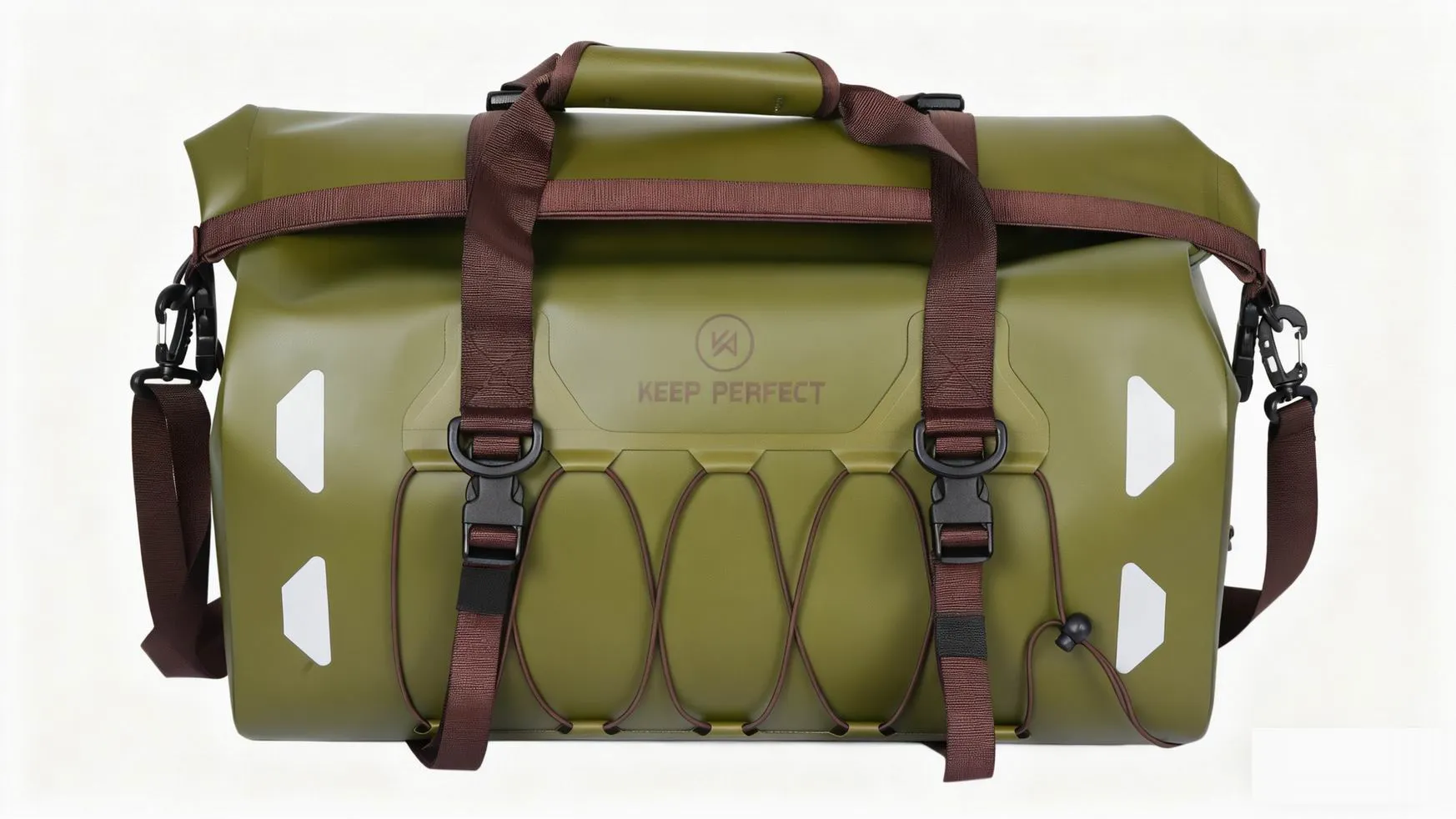
People searching for "small batch dry bags" usually want a direct, practical answer - and this page delivers one. This guide breaks down how to bring a small batch dry bag to market - OEM versus ODM, the specification and sampling steps, branding and packaging options, and the MOQ and lead time you should plan for. It is written for brands, importers and startups turning an idea into a product.
Why small batch is strategic
A small run validates demand before you commit capital to a container. If the design or color misses, the loss is small and the next iteration is fast.
How to keep cost down
Stick to stock colors and materials, limit print colors, and batch several sizes into one order. Every custom choice beyond stock pushes cost and lead time up.
Scaling from small batch
Use the first run to learn what sells, then graduate the winner to a full OEM order. Small batch is a launch tool, not a long-term margin strategy.
Customization options that actually matter
Customization goes beyond a printed logo. On a small batch dry bag you can change material and thickness, size and shape, closure type, webbing and buckle color, valves, windows, handles and straps, plus woven labels and full retail packaging.
Prioritize changes that affect function and brand perception first - closure, material and logo - then add packaging. Each option has a cost and lead-time impact, so confirm the trade-offs before finalizing the spec.
Design ownership and tooling custody
For a custom small batch dry bag, design ownership should be explicit in the contract. You own the design you commission; the factory owns its base ODM designs. If you pay for dedicated tooling, ownership or exclusive custody should be documented too.
Protect yourself with an NDA before sharing artwork and a clear clause on exclusivity. Without it, your design or colorway can appear elsewhere, which is especially risky if you are building a brand around a unique product.
Sampling, MOQ and lead time for custom orders
A custom small batch dry bag starts with a pre-production sample, typically 6--10 day for a standard design and up to 14 days with new tooling. Approve the sample before bulk, because changes after approval restart the clock.
MOQ for OEM is usually 500 pieces or more per design; ODM stock programs can start around 300 pieces. Bulk production runs 35-50 days after sample approval, then freight adds 3-6 weeks by sea or 5-10 days by air.
Small batch vs large batch programs
A small batch dry bag program can start small using existing materials and standard designs, then scale to fully custom OEM as volume grows. Small batches cost more per unit but reduce inventory risk for a new brand.
Plan the transition in advance: validate the market with a low-MOQ run, then commit to larger OEM quantities once the design and demand are proven. Choose a factory that supports both ends of the journey.
What to prepare before you request a quote
A factory can quote faster and more accurately when you provide a drawing or reference sample, target material, dimensions, closure type, colors and print placement. A tech pack is ideal but not required for a first estimate.
Include your target quantity and timeline. These two numbers change everything on a small batch dry bag quote, because material pricing, tooling amortization and freight all scale with volume and speed.
Printing and branding methods
Screen printing and heat transfer are the most common small batch dry bag branding methods, while woven labels and embossed buckles add a premium feel. The right method depends on the film, the logo detail and the quantity.
Supply vector artwork in CMYK or Pantone where possible, and approve a printed strike-off or sample before bulk. Colors can shift between film types, so a physical proof is the only reliable way to lock the final look.
| Choice | Cost effect |
|---|---|
| Stock options | Lowers |
| Custom color | Raises |
| Multiple SKUs | Spread setup |
| Factor | OEM dry bags | ODM dry bags |
|---|---|---|
| Starting point | Your design or tech pack | Existing factory design |
| Customization | Full (size, shape, material) | Color, logo, label, packaging |
| MOQ | Typically 500+ pcs | Often 300 pcs to start |
| Lead time | Longer (design + tooling) | Faster |
| Design ownership | Yours | Factory owns base design |
| Unit cost | Higher | Lower |
| Spec item | What to confirm |
|---|---|
| Material | TPU / PVC / coated nylon + thickness |
| Size | Liter volume + L x W x H in cm |
| Closure | Roll-top / zipper / clip |
| Hardware | Buckles, D-rings, valve, handles |
| Printing | Method, colors, placement |
| Packaging | Poly bag, hangtag, box, barcode |
| Stage | Typical time | What happens |
|---|---|---|
| Quote | 1-3 days | Price from your spec |
| Sampling | 6--10 day | Pre-production sample |
| Approval | 1-3 days | Your sign-off |
| Production | 35-50 days | Bulk manufacturing |
| Freight | 3-6 weeks | Sea; 5-10 days air |
| Method | Best for |
|---|---|
| Screen printing | Bold logos, 1-6 colors |
| Heat transfer | Full-color artwork |
| Woven label | Premium, durable branding |
| Embossed hardware | Subtle, high-end feel |
What small batch really means
Small batch for dry bags means 100 to 500 pieces - below the standard 500-piece MOQ but above a one-off sample. At this volume, the factory still has to cut, weld and pack the line, so per-unit cost is 20 to 40 percent higher than at 1,000 pieces, but you avoid the 5,000-piece commitment that kills new brands.
Tooling is the real cost: die-cut steel rule dies run $80 to $200 per size and are reusable. At 100 pieces, the die cost amortizes heavily, but it is still cheaper than committing to 5,000. Start with one die in one size and add SKUs as the line sells.
What to expect at 100 pieces
At 100 pieces, the factory still cuts a die and runs the line, but setup cost dominates. Expect 25 to 40 percent higher unit cost than at 1,000 pieces, and a 15 to 25 day lead time. This is the price of testing a market without a 500-piece commitment. Add a second SKU only after the first one reorders.
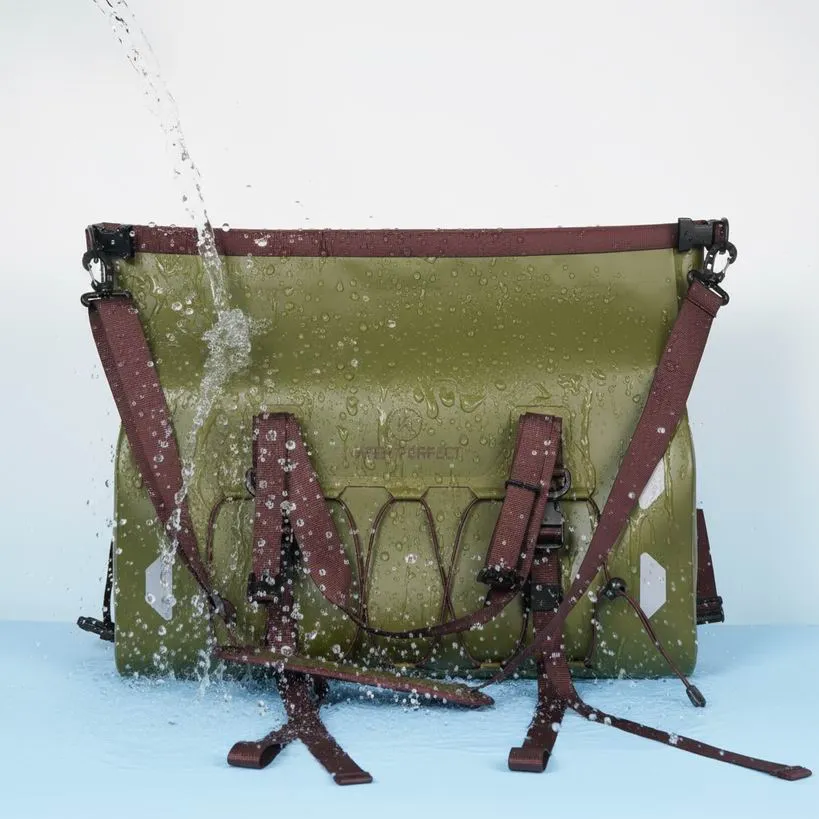
Small batch vs sample order
A sample order is 1 to 5 pieces, built by hand or on a prototype die, costing $50 to $150 each including freight. A small-batch production run is 100 to 500 pieces, built on a production die, costing 20 to 40 percent more per unit than at 1,000 pieces. The sample proves the design; the small batch proves the market. Most brands should do both: sample first, then a 200-piece small batch, then reorder at 1,000.
What small batch cannot do
At 100 pieces, custom zipper tooling is not worth it (tooling is $8,000 to $25,000). Complex woven labels and custom packaging are marginal. Stick to screen print or heat transfer, stock hardware, and standard sizes. Save the custom closures and packaging for the 1,000-piece reorder, when the tooling amortizes.
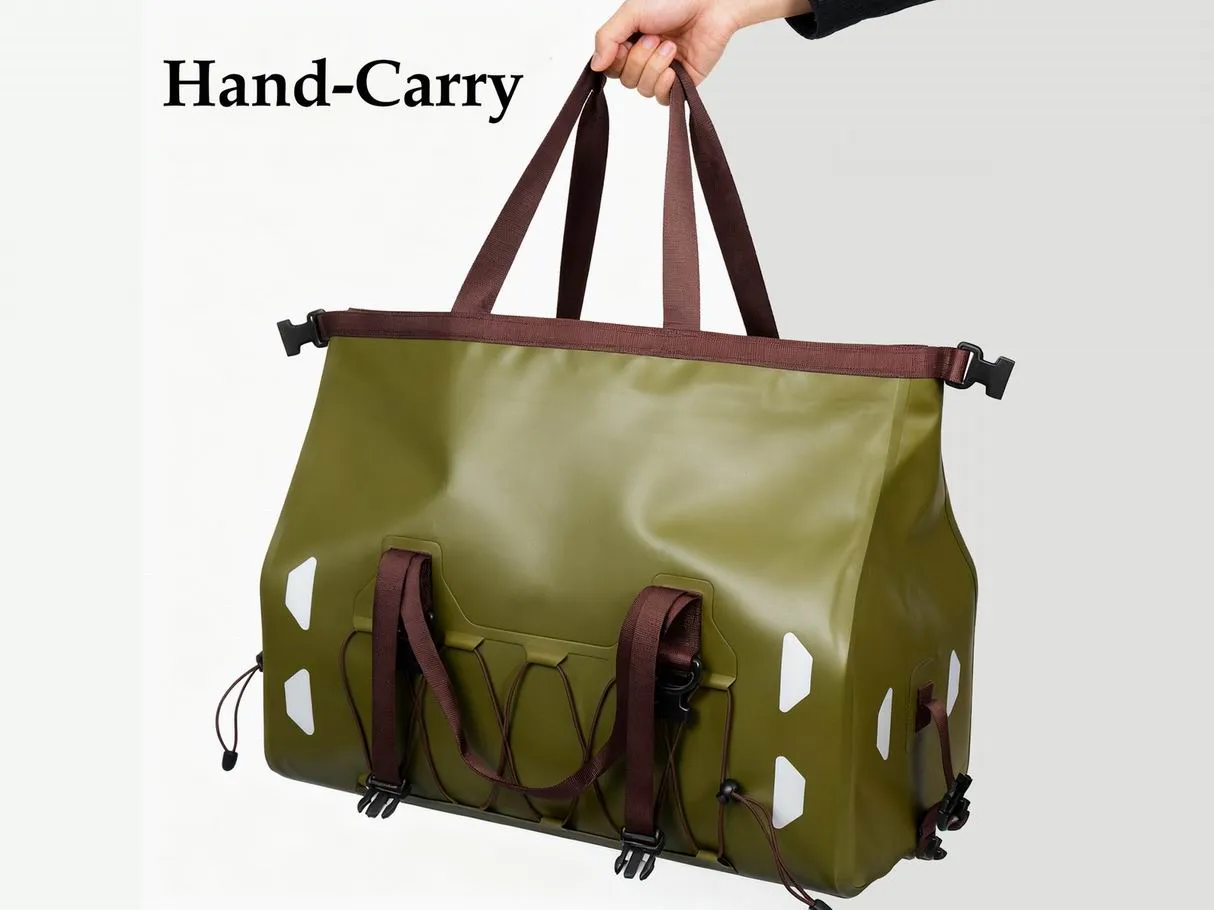
Cash flow for small-batch buyers
A 200-piece small batch at $6 FOB is $1,200 in product cost, plus $300 to $500 for sea or air freight, plus $200 for tooling and screens. Total outlay: $1,700 to $2,000 for a first test order. That is the price of finding out if a SKU sells. Compare that to a 1,000-piece order at $5 FOB = $5,000 + freight + tooling = $6,000+ - the small batch is the lower-risk entry.
Reorder at 1,000 only after the 200 sell through in 90 days. If they do not sell, you have lost $2,000, not $6,000. The small batch is the cheapest market research you can buy.
What small batch costs vs bulk
At 200 pieces, per-unit cost is 25 to 40 percent above the 1,000-piece price. A $5 bag at 1,000 pieces is $6.50 at 200. The setup cost (die, screens) is spread over fewer units. But the 200-piece order is $1,300 landed vs $5,500 for 1,000 - the lower-risk way to test a SKU.
Reorder at 1,000 only after the 200 sell through. If they do not, you have learned the SKU does not work for $1,300 instead of $5,500. Small batch is market research, not a discount.
Small batch economics
A 200-piece order at $6.50 FOB is $1,300 product, plus $300 to $500 freight, plus $200 tooling = $1,800 to $2,000 landed. Compare to a 1,000-piece order at $5 FOB = $5,000 + freight + tooling = $6,000. The small batch is the cheaper market test. For brands sourcing this spec at volume, our parent company keeps the MOQ at 500 and turns pre-production samples around in 6 to 10 days.
Reorder at 1,000 only after the 200 sell through in 90 days. If they do not, you learned for $2,000, not $6,000.
Small-batch production spec
Small-batch dry bag runs are 100 to 500 pieces, used by startups, boutique brands and Kickstarter campaigns. The factory sets up the cutting die, weld parameters and hardware kit once per batch, so there is a setup fee of USD 150 to 300 per SKU. Unit cost at 200 pieces is 20 to 35 percent higher than at 1,000 pieces, because the cutting table and welding line do not amortise. Lead time is 20 to 30 days, including a 7-day pre-production sample.
For a small-batch buyer, limit the SKU count to three or four sizes, because every new size triggers a new die and setup. Choose stock colours (black, orange, blue) rather than custom Pantone, because custom film colour has a 500 kg minimum. Logo on small batches is usually a screen print or a woven label, not a moulded patch. Ask the factory for a dated sample, a clear quote with setup fees listed separately, and a production timeline in writing. Small batch is the right call when you are validating a market, not when you are scaling.
People also ask
What is the HS code for dry bags?
Dry bags generally classify under travel goods or bags headings such as 4202. Confirm the exact 10-digit code with your freight forwarder and the destination customs authority.
What does waterproof mean on a dry bag?
Waterproof means the bag keeps water out under stated conditions. On a dry bag it is usually expressed as an IPX rating such as IPX7 or IPX8, which specifies immersion depth and time.
What is white label dry bags?
White label means buying an unbranded factory design and applying your own brand, packaging and marketing. It is the fastest and lowest-cost route to market.
Does a dry bag factory provide packaging?
Yes. Most OEM/ODM factories provide custom hangtags, retail boxes, poly bags, EAN/UPC barcodes and insert cards as part of private-label service.
What printing methods are used on dry bags?
Screen printing, heat transfer, woven labels and embossed or debossed hardware. The best method depends on the material and the logo detail.
What is private label vs OEM?
Private label is essentially ODM - you brand an existing product. OEM is a true custom build to your specification. The terms private label and ODM are often used interchangeably.
What certifications should I ask a dry bag supplier for?
REACH and RoHS material compliance for the EU, plus a third-party audit such as SGS. Ask for documents rather than verbal assurances, and check the test date.
How much does a custom dry bag cost?
A simple PVC dry bag can cost a few dollars per unit at volume, while a premium TPU bag with custom hardware and printing costs more. Unit price depends on material, size, closure and quantity.
Key takeaways
- Choose small batch dry bag by fixing the activity, size, material and closure before comparing options.
- Verify waterproofing with a stated IPX rating and a real test method, not a label.
- For bulk orders, confirm MOQ, lead time and a pre-production sample before committing.
- Match material to conditions: TPU for cold and UV, PVC for abrasion, coated nylon for weight.
- A physical pre-production sample is the only reliable way to lock material, color and printing.
- Store dry bags loose and shaded, and re-test the seal before trusting them with electronics.
Related guides
- What is a dry bag?
- Dry bag materials: TPU vs PVC vs nylon
- IPX / IP68 waterproof ratings
- Types of dry bags
- OEM dry bags
Step by step
- Decide between OEM (your design) and ODM (an existing design with your branding).
- Prepare a drawing, reference sample, dimensions, material and print placement.
- Confirm design ownership and tooling custody in writing before sampling.
- Approve a physical pre-production sample and any printed strike-off.
- Set the MOQ, lead time and packaging, then release bulk production.
Specification checklist
- Fix the specification first - material, size, closure, printing and packaging - so quotes are comparable.
- Verify waterproofing with a stated IPX rating and a real test method, and confirm the batch sampling plan.
- Order a pre-production sample and approve it before bulk production begins.
- Confirm MOQ, lead time, payment terms and the correct HS code before you commit.
- Match the material to the conditions: TPU for cold and UV, PVC for abrasion, coated nylon for weight.
- Ask for a dated test report and a pre-shipment inspection (AQL) for waterproofing and seams.
- Keep the most valuable items in an inner pouch as a second layer of protection.
- Rinse, dry and store the bag correctly to extend its lifespan season after season.
Bottom line
The bottom line is to match the route to your stage: ODM and private label are the fast, low-risk way to launch a brand, while OEM delivers true differentiation once demand is proven. Own the design in writing, approve a physical sample, and let the specification drive the quote rather than the other way around. For "small batch dry bags", this is the summary that matters most.
Frequently Asked Questions
Q1. What is the HS code for dry bags?
Dry bags generally classify under travel goods or bags headings such as 4202. Confirm the exact 10-digit code with your freight forwarder and the destination customs authority.
Q2. What does waterproof mean on a dry bag?
Waterproof means the bag keeps water out under stated conditions. On a dry bag it is usually expressed as an IPX rating such as IPX7 or IPX8, which specifies immersion depth and time.
Q3. What is white label dry bags?
White label means buying an unbranded factory design and applying your own brand, packaging and marketing. It is the fastest and lowest-cost route to market.
Q4. Does a dry bag factory provide packaging?
Yes. Most OEM/ODM factories provide custom hangtags, retail boxes, poly bags, EAN/UPC barcodes and insert cards as part of private-label service.
Q5. What printing methods are used on dry bags?
Screen printing, heat transfer, woven labels and embossed or debossed hardware. The best method depends on the material and the logo detail.
Q6. What is private label vs OEM?
Private label is essentially ODM - you brand an existing product. OEM is a true custom build to your specification. The terms private label and ODM are often used interchangeably.
Q7. What certifications should I ask a dry bag supplier for?
REACH and RoHS material compliance for the EU, plus a third-party audit such as SGS. Ask for documents rather than verbal assurances, and check the test date.
Q8. How much does a custom dry bag cost?
A simple PVC dry bag can cost a few dollars per unit at volume, while a premium TPU bag with custom hardware and printing costs more. Unit price depends on material, size, closure and quantity.
Q9. Can I put my logo on a dry bag?
Yes. Logos can be screen printed, heat transferred or applied as woven labels, and hardware can be embossed. Provide vector artwork for the cleanest result.
Q10. What customization options are available for dry bags?
Materials, colors, sizes, closure hardware, printed logos, woven labels, embossed buckles, windows, valves and custom retail packaging.
Q11. How many colors can I print on a dry bag?
Screen printing typically supports 1-6 spot colors. Full-color gradients usually require heat transfer or sublimation, which has material limitations.
Q12. What is a purge valve?
A one-way valve that lets air escape after rolling, compressing the bag for packability.
Q13. What is the lead time for a dry bag sample?
A pre-production sample typically takes 6--10 day. More complex designs with new tooling can take up to 14 days.
Q14. What are the different types of dry bags?
Roll-top, zipper, backpack, tote, phone, floating, waist pack, duffel and pouch styles, each built for a different activity and access need.
Q15. Where are most dry bags manufactured?
China, particularly the Quanzhou region of Fujian province, is the main manufacturing cluster for dry bags and outdoor bags because of material supply and welding expertise.
Q16. How long does sea freight from China take?
Sea freight to the US or Europe typically takes 3-6 weeks, while air freight takes 5-10 days. Delays vary by season and port.
Q17. What is the difference between a trading company and a factory?
A factory owns the production lines; a trading company sources from factories. A factory usually offers better pricing and control, while a trading company may offer broader product range.
Q18. What is the MOQ for OEM dry bags?
OEM MOQ is typically higher than ODM because of setup and tooling, commonly 500 pieces or more per design. ODM stock programs can start around 300 pieces.
Q19. What does IPX8 mean on a dry bag?
IPX8 means the bag survives continuous immersion beyond 1 meter under manufacturer-specified conditions. The depth and duration are only meaningful if stated.
Q20. How is the sample fee handled?
It is typically credited back against the bulk order once you proceed, so the sample effectively costs nothing on a confirmed order.