ODM dry bags let you brand a factory's existing proven design quickly, with a lower MOQ and faster lead time than full OEM. The compromise is that the same base design may appear under other labels.
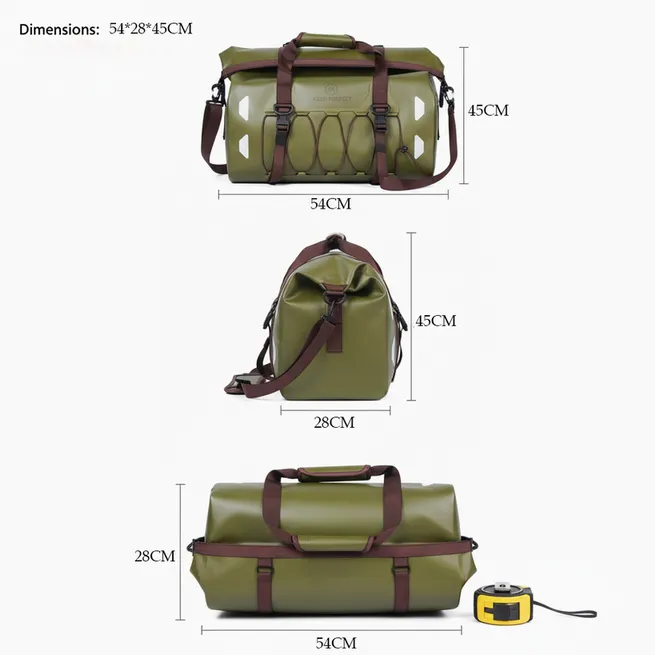
People searching for "odm dry bags" usually want a direct, practical answer - and this page delivers one. This guide breaks down how to bring a ODM dry bag to market - OEM versus ODM, the specification and sampling steps, branding and packaging options, and the MOQ and lead time you should plan for. It is written for brands, importers and startups turning an idea into a product.
What ODM offers
Original design manufacturing means the factory already owns the design and tooling, and you add your logo, colors and packaging. It is the fastest route to a branded product.
Why brands start with ODM
A proven design has already passed the factory's tests, so sampling is quicker and risk is lower. New brands use ODM to launch, then migrate to OEM for a unique product.
The limits to know
You may not own the design, and competitors can brand the same base bag. If exclusivity matters, negotiate a modification or a territory before committing.
Sampling, MOQ and lead time for custom orders
A custom ODM dry bag starts with a pre-production sample, typically 6--10 day for a standard design and up to 14 days with new tooling. Approve the sample before bulk, because changes after approval restart the clock.
MOQ for OEM is usually 500 pieces or more per design; ODM stock programs can start around 300 pieces. Bulk production runs 35-50 days after sample approval, then freight adds 3-6 weeks by sea or 5-10 days by air.
Tech pack and specification details
A ODM dry bag tech pack specifies dimensions, materials, colors, hardware, printing placement and testing requirements. The more precise the pack, the fewer surprises in the sample and the cheaper the final product.
Even a one-page spec is better than a verbal brief. Include tolerances, a Pantone or color reference, and a photo or reference sample so the factory has a concrete target to match.
Color matching and Pantone references
Color is one of the most common ODM dry bag complaints. Different films render color differently, so a Pantone number alone may not match a physical sample. Always approve a physical strike-off or color chip before bulk.
Ask the factory to show the color on your actual material, not on a swatch card. A photo is not reliable; lighting and screens shift color, so confirm the final film and finish in person or via an approved physical sample.
Small batch vs large batch programs
A ODM dry bag program can start small using existing materials and standard designs, then scale to fully custom OEM as volume grows. Small batches cost more per unit but reduce inventory risk for a new brand.
Plan the transition in advance: validate the market with a low-MOQ run, then commit to larger OEM quantities once the design and demand are proven. Choose a factory that supports both ends of the journey.
Printing and branding methods
Screen printing and heat transfer are the most common ODM dry bag branding methods, while woven labels and embossed buckles add a premium feel. The right method depends on the film, the logo detail and the quantity.
Supply vector artwork in CMYK or Pantone where possible, and approve a printed strike-off or sample before bulk. Colors can shift between film types, so a physical proof is the only reliable way to lock the final look.
Customization options that actually matter
Customization goes beyond a printed logo. On a ODM dry bag you can change material and thickness, size and shape, closure type, webbing and buckle color, valves, windows, handles and straps, plus woven labels and full retail packaging.
Prioritize changes that affect function and brand perception first - closure, material and logo - then add packaging. Each option has a cost and lead-time impact, so confirm the trade-offs before finalizing the spec.
| Aspect | ODM | OEM |
|---|---|---|
| Speed | Fast | Slower |
| MOQ | Low | Higher |
| Design | Factory's | Yours |
| Factor | OEM dry bags | ODM dry bags |
|---|---|---|
| Starting point | Your design or tech pack | Existing factory design |
| Customization | Full (size, shape, material) | Color, logo, label, packaging |
| MOQ | Typically 500+ pcs | Often 300 pcs to start |
| Lead time | Longer (design + tooling) | Faster |
| Design ownership | Yours | Factory owns base design |
| Unit cost | Higher | Lower |
| Spec item | What to confirm |
|---|---|
| Material | TPU / PVC / coated nylon + thickness |
| Size | Liter volume + L x W x H in cm |
| Closure | Roll-top / zipper / clip |
| Hardware | Buckles, D-rings, valve, handles |
| Printing | Method, colors, placement |
| Packaging | Poly bag, hangtag, box, barcode |
| Stage | Typical time | What happens |
|---|---|---|
| Quote | 1-3 days | Price from your spec |
| Sampling | 6--10 day | Pre-production sample |
| Approval | 1-3 days | Your sign-off |
| Production | 35-50 days | Bulk manufacturing |
| Freight | 3-6 weeks | Sea; 5-10 days air |
| Method | Best for |
|---|---|
| Screen printing | Bold logos, 1-6 colors |
| Heat transfer | Full-color artwork |
| Woven label | Premium, durable branding |
| Embossed hardware | Subtle, high-end feel |
MOQ tiers and the price ladder
Buyers almost always ask about minimum order quantity first, and the honest answer is layered. At an ODM private-label dry bag program the entry MOQ is 500 pieces per color on an existing tooling, which is the threshold at which a welded line can be set up efficiently without wasting film. Below that you pay a small-batch surcharge; above it the per-unit price steps down in clear tiers that your supplier should write into the quote rather than bury. When buyers want to see this on a real line, JUNYUAN BAGS in Quanzhou opens its Quanzhou factory for a live walkthrough.
A realistic ladder looks like this: 500-999 pieces sits at the top unit price, 1,000-2,999 drops roughly 8-12%, 3,000-5,999 drops another 6-10%, and 6,000+ approaches the marginal cost of film plus welding time. Film is 40-60% of unit cost, so the tier breaks follow film consumption rather than labor. Ask for this ladder in writing before you compare factories; a supplier that quotes one flat number across all volumes is hiding flexibility.
Quantity (pcs) | Relative unit price | Lead time |
|---|---|---|
300-499 | +15-25% surcharge | 15-20 days |
500-999 | 100% (base) | 35-45 days |
1,000-2,999 | 88-92% | 40-50 days |
3,000-5,999 | 80-86% | 45-55 days |
6,000+ | 74-80% | 50-60 days |
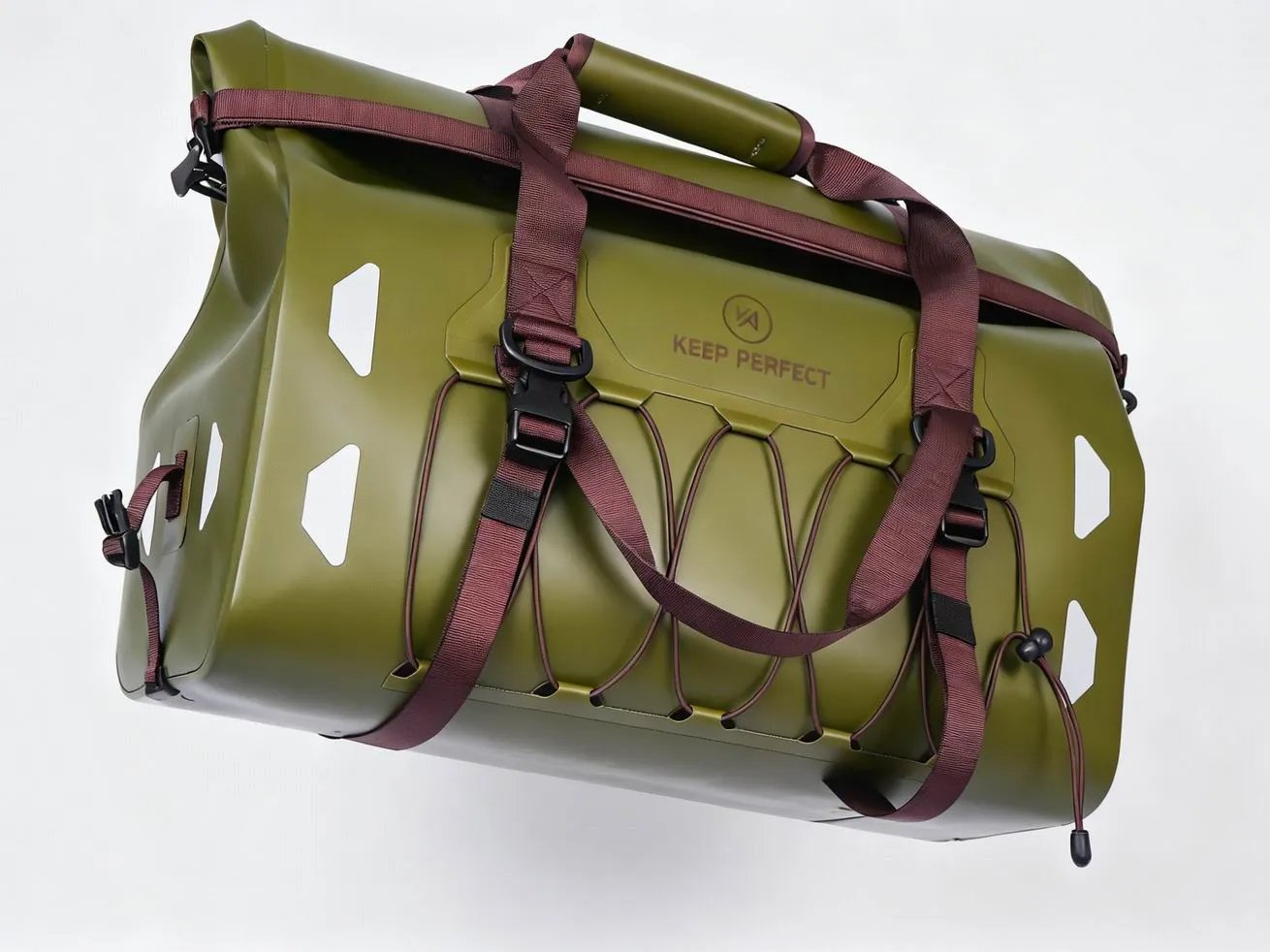
Sampling and bulk lead-time breakdown
The sample stage is where a serious factory earns trust. For an ODM private-label dry bag program, pre-production sampling takes 6-10 days once the tech pack, color swatches and hardware are confirmed. That sample fee is normally credited back against the bulk order, so treat it as a refundable deposit rather than an extra cost. Use the sample to lock material thickness, color match (Delta-E under the agreed light source), closure roll length, print placement and the actual weld bead before anything else moves.
Once the sample is approved, the 35-50 day bulk clock breaks into predictable pieces: material cutting 5-7 days, RF welding and assembly 15-25 days, printing and hardware 5-8 days, leak testing and QC 3-5 days, and export packaging 2-3 days. Add sea freight to the US West Coast at roughly 14-20 days door-to-port, or air express at 5-8 days door-to-door for urgent reorders. Build these buffers into your launch calendar; the factory clock does not include your port, customs or 3PL time.
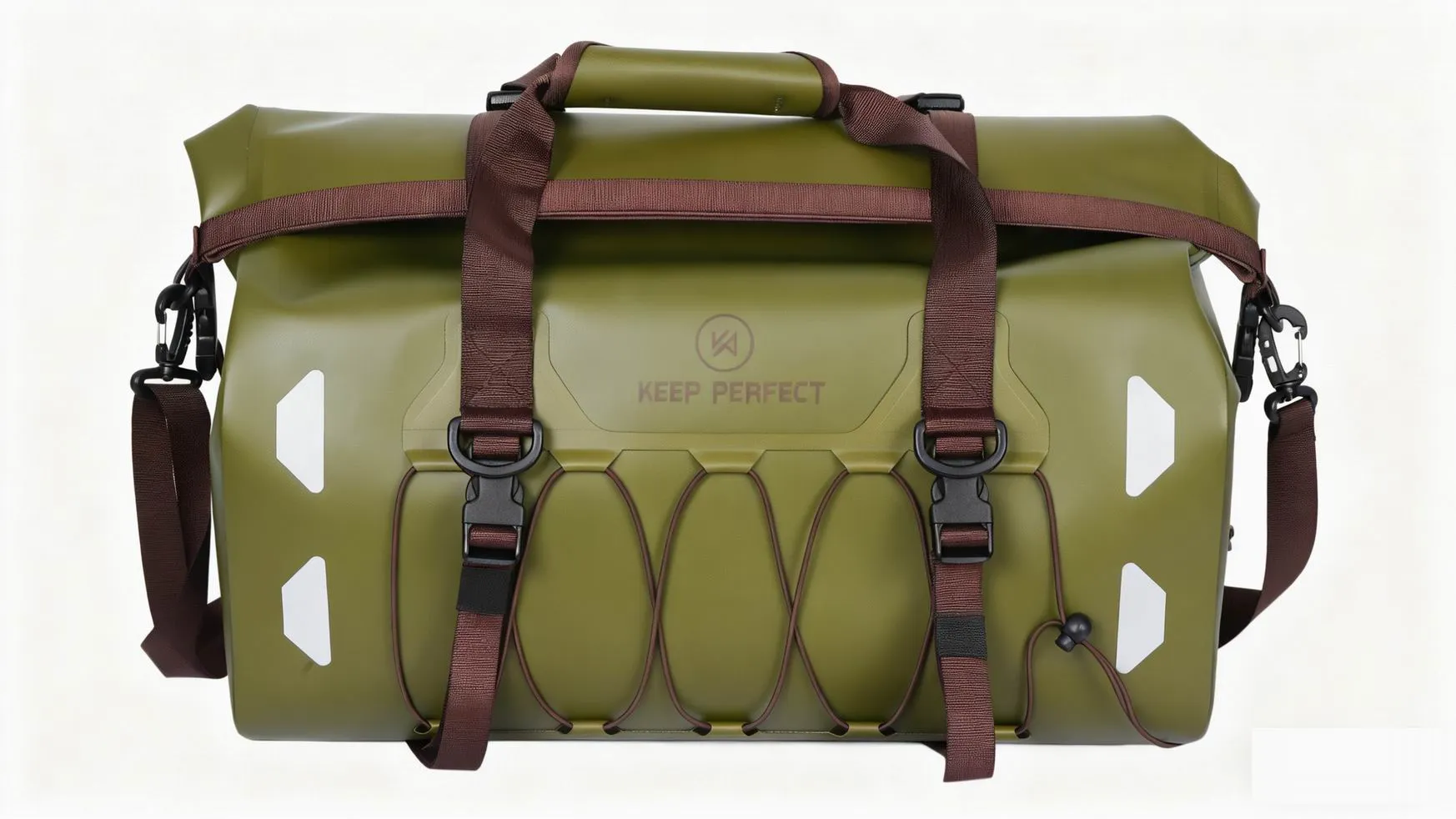
QC standards, AQL and inspection
Waterproofing is a promise that must be measured per batch, not assumed. For an ODM private-label dry bag program, in-line QC checks weld bead width and temperature at the first article of every shift, and finished bags go through 100% visual and closure inspection before packing. The waterproof gate itself is an inflation-and-submersion bubble test on a sampled share of the run, plus seam peel tests logged in newtons per 25 millimetres.
Most buyers settle on AQL 2.5 for major defects and 4.0 for minor, with a pre-shipment third-party inspection (SGS, Bureau Veritas or Intertek) covering seams, closures, printing registration and hardware torque. Dedicated tooling you pay for should be contractually yours, and the factory should hold it for reorders so your second run matches the first. Confirm the inspection checklist in writing before bulk starts.
Gate | What is checked | Standard |
|---|---|---|
Incoming material | Film thickness, color, roll length | 0.35/0.5/0.7mm tolerance |
First article | Weld bead, closure, print | Approved sample |
Inline QC | Weld temp/pressure, geometry | Per shift |
Final leak test | Inflation + submersion | No bubbles |
Pre-shipment | AQL major/minor | AQL 2.5 / 4.0 |
Payment, packaging and export terms
Payment terms for a new buyer are typically 30% deposit against the PI and 70% balance against the copy of the bill of lading, with the balance often negotiable to L/C at larger volumes. Packaging ranges from a single polybag per unit up to a printed retail box; specify hang-holes, barcode labels and drop-tested cartons (typically 5-layer corrugated, 12-24 units per master carton) so the goods survive the container. Export-wise, DDP covers 100+ destination countries and is the lowest-risk option for first-time importers because the factory handles duties and last-mile delivery. FOB or CIF suits buyers with a trusted forwarder. Confirm the HS code (commonly 4202) and REACH/RoHS material declarations before the vessel sails, because re-classifying a container at the port is far more expensive than fixing the paperwork at origin.
Putting it into a sourcing timeline
To tie the numbers together, picture a realistic sourcing timeline from first email to landed carton. Week one: you send the tech pack, the factory confirms feasibility and quotes the MOQ ladder in writing. Weeks two to three: a pre-production sample is made in 6-10 days, and you approve material thickness, color, closure and print. Weeks four to ten: bulk runs 35-50 days across cutting, welding, printing, leak testing and export packaging. Weeks eleven to thirteen: sea freight DDP to 100+ countries lands the cartons at your door.
Build in buffer. The factory clock excludes your own product photography, listing copy, warehouse intake and any rework, so add four to six weeks of slack before a marketing launch. Buyers who compress this timeline typically either expedite freight at high cost or ship a half-tested batch. The disciplined route samples early, agrees AQL 2.5/4.0 inspection in writing, and treats the sample fee as a refundable deposit rather than a cost to avoid.
Documents, compliance and avoiding customs delays
The paperwork side of a dry bag order is where first-time importers lose the most time. Before the vessel sails, confirm the commercial invoice, packing list, bill of lading and the correct HS code - commonly under travel goods heading 4202, with the exact 10-digit code checked against your forwarder and the destination customs authority. Pair these with REACH and RoHS material declarations for the EU market; a missing declaration can hold a container at the border for weeks.
Payment terms for a new buyer are typically a 30% deposit against the PI and 70% against the copy of the bill of lading, negotiable to letter of credit at larger volumes. Packaging should be drop-tested: single polybag per unit, 5-layer corrugated master cartons of 12-24 units, with barcodes and hang-holes if retail. DDP into 100+ countries removes the customs headache entirely, because the factory handles duty and last-mile delivery. Sort this paperwork at sampling stage, not when the goods are on the water.
Why these production numbers matter
For buyers evaluating this at production scale, the numbers that matter are concrete: a dedicated Quanzhou dry bag line running since 2014, a 4,950 square-metre facility on 7 production lines with 149 welding and sewing machines and about 137 trained operators, outputting roughly 200,000 pieces a month as verified by an SGS audit. Quality is backed by BSCI and ISO9001 systems, and finished orders ship DDP to over 100 countries. Those audited figures are what turn a well-written spec sheet into a repeatable supply of bags that actually keep gear dry, batch after batch, rather than a one-off sample that cannot be reproduced. For an importer, that repeatability is the difference between a launch that reorders smoothly and one that spends its first year chasing leaks and replacements.
People also ask
What does waterproof mean on a dry bag?
Waterproof means the bag keeps water out under stated conditions. On a dry bag it is usually expressed as an IPX rating such as IPX7 or IPX8, which specifies immersion depth and time.
Can I put my logo on a dry bag?
Yes. Logos can be screen printed, heat transferred or applied as woven labels, and hardware can be embossed. Provide vector artwork for the cleanest result.
What customization options are available for dry bags?
Materials, colors, sizes, closure hardware, printed logos, woven labels, embossed buckles, windows, valves and custom retail packaging.
Does a dry bag factory provide packaging?
Yes. Most OEM/ODM factories provide custom hangtags, retail boxes, poly bags, EAN/UPC barcodes and insert cards as part of private-label service.
What is private label vs OEM?
Private label is essentially ODM - you brand an existing product. OEM is a true custom build to your specification. The terms private label and ODM are often used interchangeably.
What is the HS code for dry bags?
Dry bags generally classify under travel goods or bags headings such as 4202. Confirm the exact 10-digit code with your freight forwarder and the destination customs authority.
What is white label dry bags?
White label means buying an unbranded factory design and applying your own brand, packaging and marketing. It is the fastest and lowest-cost route to market.
How many colors can I print on a dry bag?
Screen printing typically supports 1-6 spot colors. Full-color gradients usually require heat transfer or sublimation, which has material limitations.
Key takeaways
- Choose ODM dry bag by fixing the activity, size, material and closure before comparing options.
- Verify waterproofing with a stated IPX rating and a real test method, not a label.
- For bulk orders, confirm MOQ, lead time and a pre-production sample before committing.
- Match material to conditions: TPU for cold and UV, PVC for abrasion, coated nylon for weight.
- A physical pre-production sample is the only reliable way to lock material, color and printing.
- Store dry bags loose and shaded, and re-test the seal before trusting them with electronics.
Related guides
- What is a dry bag?
- Dry bag materials: TPU vs PVC vs nylon
- IPX / IP68 waterproof ratings
- Types of dry bags
- OEM dry bags
Step by step
- Decide between OEM (your design) and ODM (an existing design with your branding).
- Prepare a drawing, reference sample, dimensions, material and print placement.
- Confirm design ownership and tooling custody in writing before sampling.
- Approve a physical pre-production sample and any printed strike-off.
- Set the MOQ, lead time and packaging, then release bulk production.
Specification checklist
- Fix the specification first - material, size, closure, printing and packaging - so quotes are comparable.
- Verify waterproofing with a stated IPX rating and a real test method, and confirm the batch sampling plan.
- Order a pre-production sample and approve it before bulk production begins.
- Confirm MOQ, lead time, payment terms and the correct HS code before you commit.
- Match the material to the conditions: TPU for cold and UV, PVC for abrasion, coated nylon for weight.
- Ask for a dated test report and a pre-shipment inspection (AQL) for waterproofing and seams.
- Keep the most valuable items in an inner pouch as a second layer of protection.
- Rinse, dry and store the bag correctly to extend its lifespan season after season.
Bottom line
The bottom line is to match the route to your stage: ODM and private label are the fast, low-risk way to launch a brand, while OEM delivers true differentiation once demand is proven. Own the design in writing, approve a physical sample, and let the specification drive the quote rather than the other way around. For "odm dry bags", this is the summary that matters most.
Frequently Asked Questions
Q1. What does waterproof mean on a dry bag?
Waterproof means the bag keeps water out under stated conditions. On a dry bag it is usually expressed as an IPX rating such as IPX7 or IPX8, which specifies immersion depth and time.
Q2. Can I put my logo on a dry bag?
Yes. Logos can be screen printed, heat transferred or applied as woven labels, and hardware can be embossed. Provide vector artwork for the cleanest result.
Q3. What customization options are available for dry bags?
Materials, colors, sizes, closure hardware, printed logos, woven labels, embossed buckles, windows, valves and custom retail packaging.
Q4. Does a dry bag factory provide packaging?
Yes. Most OEM/ODM factories provide custom hangtags, retail boxes, poly bags, EAN/UPC barcodes and insert cards as part of private-label service.
Q5. What is private label vs OEM?
Private label is essentially ODM - you brand an existing product. OEM is a true custom build to your specification. The terms private label and ODM are often used interchangeably.
Q6. What is the HS code for dry bags?
Dry bags generally classify under travel goods or bags headings such as 4202. Confirm the exact 10-digit code with your freight forwarder and the destination customs authority.
Q7. What is white label dry bags?
White label means buying an unbranded factory design and applying your own brand, packaging and marketing. It is the fastest and lowest-cost route to market.
Q8. How many colors can I print on a dry bag?
Screen printing typically supports 1-6 spot colors. Full-color gradients usually require heat transfer or sublimation, which has material limitations.
Q9. What printing methods are used on dry bags?
Screen printing, heat transfer, woven labels and embossed or debossed hardware. The best method depends on the material and the logo detail.
Q10. How much does a custom dry bag cost?
A simple PVC dry bag can cost a few dollars per unit at volume, while a premium TPU bag with custom hardware and printing costs more. Unit price depends on material, size, closure and quantity.
Q11. What certifications should I ask a dry bag supplier for?
REACH and RoHS material compliance for the EU, plus a third-party audit such as SGS. Ask for documents rather than verbal assurances, and check the test date.
Q12. What is a dry bag used for?
A dry bag keeps gear dry during kayaking, boating, camping, fishing, motorcycling, SUP and travel, protecting clothing, electronics, food and sleeping gear.
Q13. What documents do I need to import dry bags?
Commercial invoice, packing list, bill of lading or airway bill, and any compliance certificates such as REACH test reports.
Q14. How are dry bags made?
The body is cut from waterproof film or coated fabric, seams are welded or taped, hardware is attached, and each bag is leak-tested before shipping.
Q15. How do I clean a dry bag?
Rinse with fresh water, wipe with mild soap, and air-dry fully before storing. Avoid harsh solvents and keep zipper tracks clean of sand.
Q16. How do I import dry bags from China?
Choose a specialized factory, confirm MOQ and lead time, order a pre-production sample, then arrange freight with FOB, CIF or DDP terms and confirm the correct HS code for customs.
Q17. What is the difference between a dry bag and a dry sack?
They are the same product. Dry sack is the more common British and outdoor-store term, while dry bag is used more in the US.
Q18. Can a dry bag factory help with design?
Yes. ODM factories offer proven designs you can customize, and many provide design, sampling and packaging support for brands without an in-house designer.
Q19. How many rolls should a dry bag have?
Three to five tight rolls is the standard for a reliable seal. Fewer rolls can leak; more rolls are safe but reduce usable capacity.
Q20. Are dry bags good for travel?
Yes. A dry bag is useful as a packable laundry bag, a wet-clothes separator or a rain-proof layer inside a suitcase.