Close a dry bag by squeezing out excess air, folding the open end into a neat roll, rolling it down three to five times, then clipping the two side-release buckle ends together. For zipper bags, close the zipper fully and seat the slider.
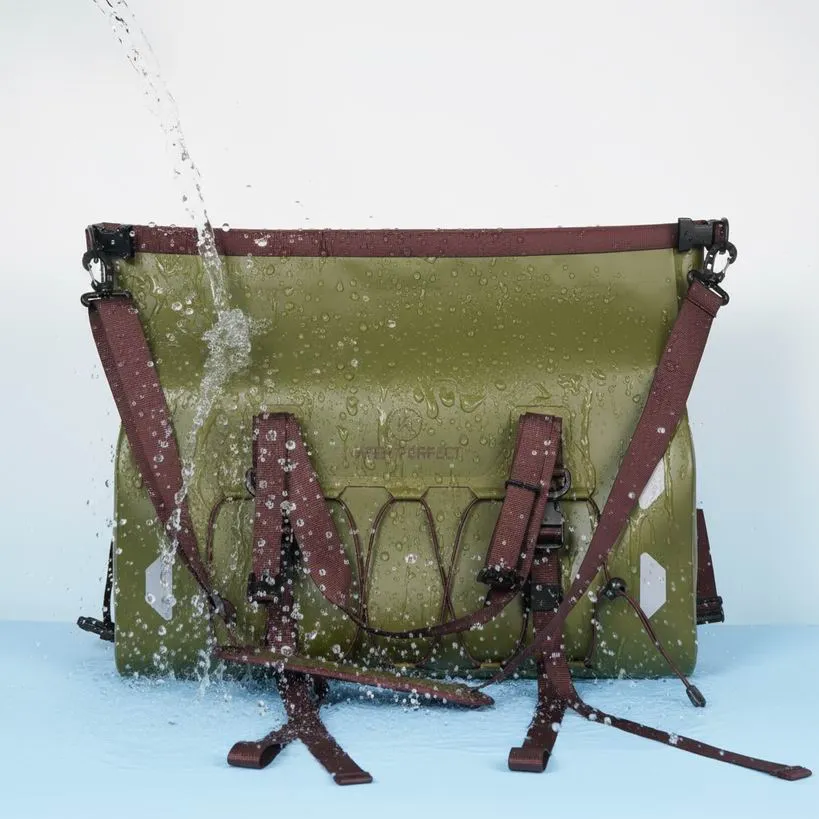
People searching for "how to close a dry bag" usually want a direct, practical answer - and this page delivers one. This guide explains what a dry bag is, how it works, the materials and closures that matter, and how to choose, use and maintain one. It is a plain-English primer for anyone new to dry bags or looking to buy smarter.
Roll-top closure, step by step
Keep the top edge straight before you roll, because a messy first fold weakens the seal. Roll downward firmly three to five times, then bend the ends toward each other and snap the buckle to lock the roll.
Zipper and clip closures
A watertight zipper needs the slider run all the way into the end stop, with no gap. A phone-bag clamp needs both edges fully seated before you lock it, and a quick visual check that the seal is flat.
How to choose the right one
Start from the activity, then the size, then the material budget. Kayakers and rafters need a robust roll-top with a reliable buckle; commuters often prefer a dry bag backpack; beach and boat users may want a tote or floating bag.
If you are buying in volume for a brand, the same logic applies but is weighted by unit cost, MOQ and lead time. Fix your specification first, then compare products and suppliers on identical terms.
What the term actually means
A dry bag is a soft-sided container designed to keep its contents dry when the bag is splashed, rained on, briefly dropped in water or submerged. Unlike a standard backpack or duffel, it seals at the opening rather than relying on a fabric flap.
The two features that define a dry bag are a waterproof body with no needle holes that leak, and a watertight closure. Everything else - straps, valves, windows and colors - is secondary to those two functions.
Common myths, corrected
A dry bag does not have to be rolled perfectly to shed rain, but it does need three to five tight rolls to survive submersion. Another myth is that thicker film always means more waterproof - the closure and seams matter more.
Not every dry bag floats, and not every floating bag will hold heavy gear up. Treat marketing claims as starting points and verify the specific rating and buoyancy before relying on a bag in deep water.
Key terms to know
When you shop for a dry bag, you will see a handful of repeated terms. IPX7 and IPX8 describe waterproof ratings; TPU, PVC and coated nylon describe materials; and MOQ describes the minimum order quantity if you are buying in bulk.
Other useful terms include RF welding (fusing seams with radio frequency), watertight zipper, roll-top, D-ring, purge valve and dry sack. Knowing them makes it easier to compare products and to speak the same language as a supplier.
Sizes and what fits in each
A dry bag is labeled by liters, but capacity is approximate because the roll-top eats a few centimeters of usable length. As a rule, size up for bulky gear and down for a compact packable layer.
Use 2-5L for phone and valuables, 10-15L for day trips, 20-30L for overnight gear, and 40-60L for multi-day expeditions. Match the size to the gear, not to the label.
How the waterproofing works
Waterproofing comes from two layers of engineering. The body film is inherently waterproof, and the seams are joined by welding or seam tape instead of ordinary stitching, because a needle creates holes that wick water through the fabric.
The roll-top closure traps air and creates a spiral seal when you roll it three or more times and clip the ends. A zipper bag uses a rubber-toothed watertight zipper, and a phone bag uses a snap-and-lock clamp that pinches the film closed.
| Closure | How to seal |
|---|---|
| Roll-top | Roll 3-5x + buckle |
| Zipper | Full zipper + seated slider |
| Clip | Clamp both edges + lock |
| Size | Typical use | Example contents |
|---|---|---|
| 2L-5L | Phone and valuables | Phone, wallet, keys, passport |
| 10L-15L | Day trips | Jacket, lunch, towel, camera |
| 20L-30L | Overnight / kayak deck | Sleeping bag, clothes, food |
| 40L-60L | Multi-day expedition | Sleep system + clothing |
| Factor | Roll-top | Zipper |
|---|---|---|
| Closure | Roll 3+ times + buckle | Watertight zipper |
| Waterproofing | Highest (IPX8 capable) | High (IPX7/IPX8) |
| Access speed | Medium | Fast |
| Cost | Lower | Higher |
| Best for | Kayaking, rafting | Deck bags, quick access |
| Question | Short answer |
|---|---|
| Is it waterproof? | Yes, when closed correctly |
| Does it float? | Usually, with trapped air |
| Best material? | Depends on use and budget |
| Right size? | Match liters to your gear |
| Lifespan? | Many seasons with care |
| Do | Don't |
|---|---|
| Roll 3-5 times | Overpack the top |
| Rinse after saltwater | Machine wash |
| Air-dry fully | Store wet |
| Test before electronics | Assume it never leaks |
Step-by-step technique that actually seals
When buyers want to see this on a real line, our parent company opens its Quanzhou factory for a live walkthrough.Using a correctly rolled roll-top closure correctly is a sequence, and skipping a step is why bags leak. Open the roll-top fully, load gear so nothing pokes the film, leave 10-15cm of empty collar, then squeeze excess air out as you fold. Fold the collar down in even rolls - three or four turns - so the flange is flat and wide, then centre the buckle and press it shut. A wide, flat roll seals far better than a narrow, bunched one.
The closure check is simple: with the bag closed, try to pull the two sides of the buckle apart. If the roll loosens, you left too little fold or trapped too much air. A correctly closed bag feels firm and the roll does not balloon when you squeeze the body. Test the seal at home in a sink with paper towel before trusting it with electronics on the water.
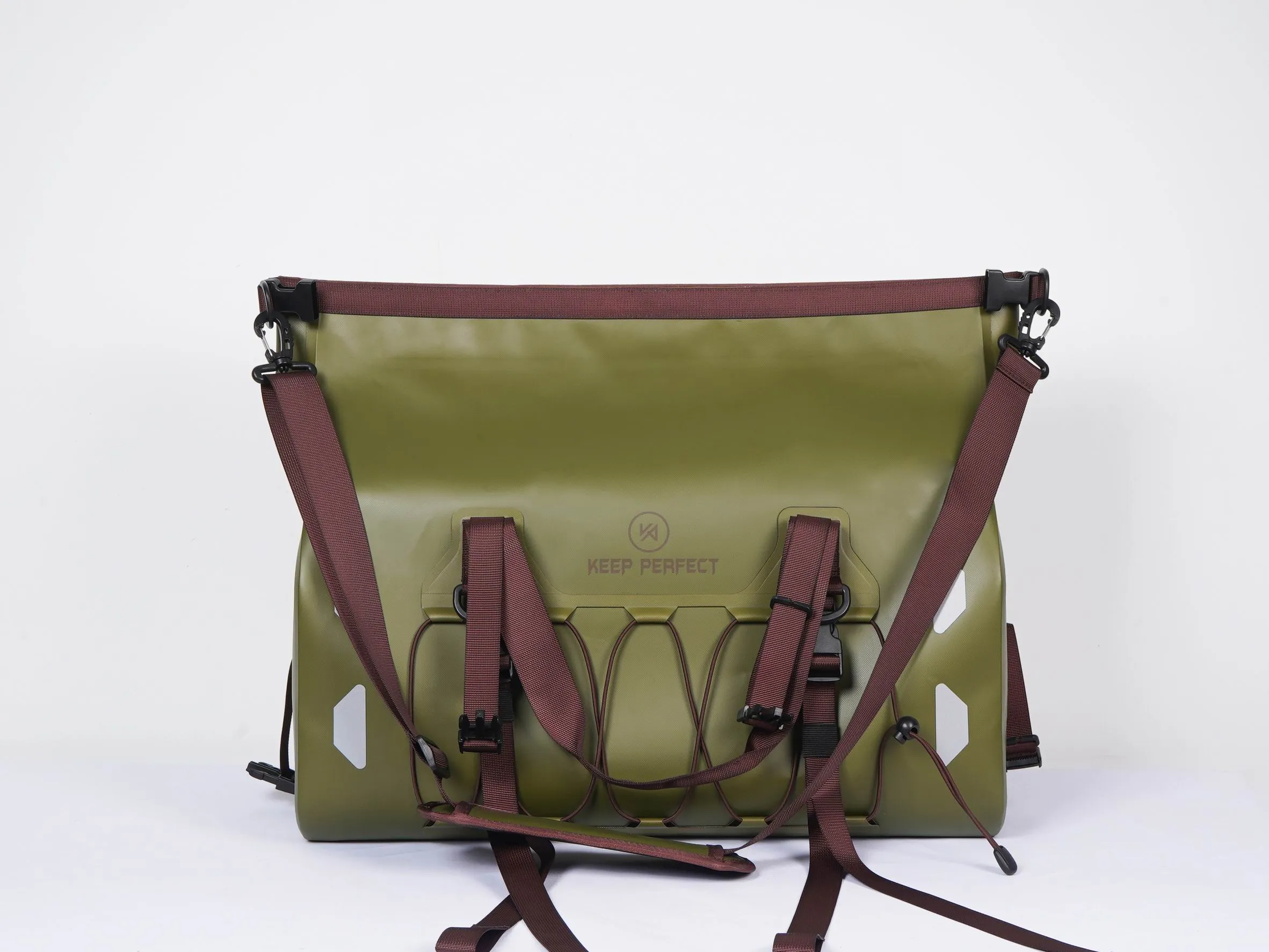
Capacity, shapes and what rolls fit
Roll-top capacity is nominal, so read centimetres. After rolling, roughly 10-15cm of bag length is consumed by the fold, meaning a bag advertised at 20L gives you nearer 16-17L of usable space. Cylindrical roll-tops pack bulky, soft gear well; rectangular backpack-style dry bags pack laptops and books better because their flat sides stack. Same litre rating, very different fit - measure your largest item and compare it to the bag's interior dimensions.
Rated | Usable after roll | Good for |
|---|---|---|
5L | ~4L | Phone, wallet |
10L | ~8L | Day layers |
20L | ~16L | Change of clothes |
30L | ~24L | Overnight kit |
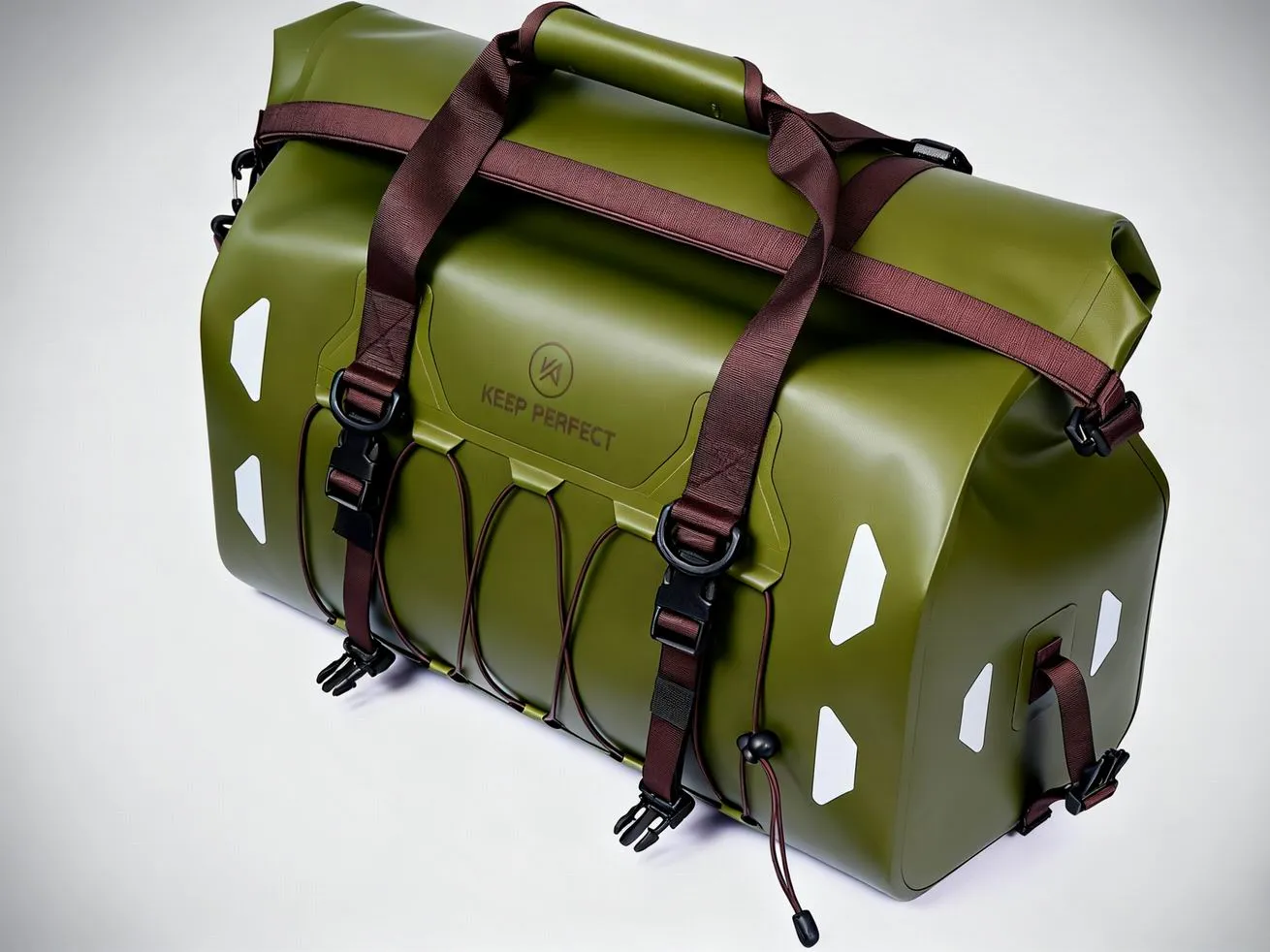
Fixing the most common closure errors
The repeated errors are over-packing, under-rolling and wet-gear against the seal. Over-packing pushes gear up into the flange so the roll cannot close flat - leave the collar empty. Under-rolling means only one or two folds, which leaves the seal barely tested; three to four turns is the safe minimum. And wet swimwear packed against the roll can wick moisture past the flange - put damp items in a separate inner pouch. If you are unsure, the home test never lies: drop paper towel inside, close the bag, submerge it for ten minutes, then open. Dry paper means the seal works; damp paper means more rolls, a cleaner flange, or a closer look at the buckle. This five-minute check prevents most field disappointment.
Care that keeps the seal working
The closure performs best when the flange and buckle are clean. Sand and salt crystals in the roll create tiny gaps, so rinse the rolled opening with fresh water after beach or river use and let it dry before storage. Avoid folding the flange with sharp creases that could eventually crack the film, and store the bag loosely rolled - not compressed - in a cool, shaded place. When the buckle loosens over years of use, a replacement clip is a one-dollar part that restores the seal; there is no need to retire the whole bag. With clean flanges, correct rolling and occasional inspection of the weld beads, a dry bag closure keeps its waterproof promise for years of regular trips.
The home dry test and pre-trip habit
The most useful habit you can build is the home sink test. Put paper towel inside, close the bag exactly as you would on the water - four tight rolls, buckle shut - and submerge it for ten minutes. Open it dry and the seal works for the real trip; open it damp and you have learned the lesson at home instead of on a wet phone. Repeat the test once a season as the film ages.
Before every trip, spend sixty seconds: squeeze the closed bag for firmness, check the flange is free of sand, confirm the buckle clicks, and look for pinholes along the welds. Leave 10-15cm of empty collar and never pack sharp objects against the film. These checks take almost no time but catch the under-rolls and pinholes that turn a great day out into a soaked wallet. A dry bag only works when the closure is closed correctly - the film is the easy part.
Packing order that protects your gear
How you load the bag matters as much as how you close it. Put the heaviest items - water bottle, camera, shoes - at the bottom against the base, soft layers and clothing in the middle, and delicate items near the top where pressure is lowest. Keep phones and documents in a separate inner pouch as a second barrier, even inside a sealed bag. Never pack sharp tackle, carabiners or keys directly against the film; wrap them or stow them in an outer pocket.
Leave the top 10-15cm of the bag completely empty so the roll can fold flat. Squeeze excess air out as you roll - a puffed roll seals worse than a tight one. Fold four even turns, centre the buckle, and clip both sides. After closing, give the bag a gentle squeeze: it should feel firm, and the roll should not balloon. That packing order plus four tight rolls is what turns a sack into a genuinely waterproof container on the water.
Why these production numbers matter
For buyers evaluating this at production scale, the numbers that matter are concrete: a dedicated Quanzhou dry bag line running since 2014, a 4,950 square-metre facility on 7 production lines with 149 welding and sewing machines and about 137 trained operators, outputting roughly 200,000 pieces a month as verified by an SGS audit. Quality is backed by BSCI and ISO9001 systems, and finished orders ship DDP to over 100 countries. Those audited figures are what turn a well-written spec sheet into a repeatable supply of bags that actually keep gear dry, batch after batch, rather than a one-off sample that cannot be reproduced. For an importer, that repeatability is the difference between a launch that reorders smoothly and one that spends its first year chasing leaks and replacements.
People also ask
What is a purge valve?
A one-way valve that lets air escape after rolling, compressing the bag for packability.
What are the parts of a dry bag?
Body fabric, roll-top or zipper closure, buckle, D-rings or attachment points, straps or handles, and optional purge valve or window.
How many rolls should a dry bag have?
Three to five tight rolls is the standard for a reliable seal. Fewer rolls can leak; more rolls are safe but reduce usable capacity.
What is a D-ring on a dry bag?
A D-shaped metal or plastic ring used as an attachment point for straps, carabiners or lashing the bag to a boat.
What is the difference between a dry bag and a backpack?
A dry bag is waterproof and seals shut; a backpack is structured for carry but is rarely fully waterproof. A dry bag backpack combines both.
What does IPX8 mean on a dry bag?
IPX8 means the bag survives continuous immersion beyond 1 meter under manufacturer-specified conditions. The depth and duration are only meaningful if stated.
Are dry bags safe for electronics?
Yes for water protection, but they do not protect against impact. Use a padded or dedicated electronics dry bag and test it first.
Do dry bag liters equal real capacity?
No. Liter ratings are approximate and the roll-top eats a few centimeters of usable length. Treat them as a guide and size up for bulky gear.
Key takeaways
- Choose dry bag by fixing the activity, size, material and closure before comparing options.
- Verify waterproofing with a stated IPX rating and a real test method, not a label.
- For bulk orders, confirm MOQ, lead time and a pre-production sample before committing.
- Match material to conditions: TPU for cold and UV, PVC for abrasion, coated nylon for weight.
- A physical pre-production sample is the only reliable way to lock material, color and printing.
- Store dry bags loose and shaded, and re-test the seal before trusting them with electronics.
Related guides
- What is a dry bag?
- Dry bag materials: TPU vs PVC vs nylon
- IPX / IP68 waterproof ratings
- Types of dry bags
- OEM dry bags
Step by step
- Identify what must stay dry and how wet the conditions will be.
- Choose a size that fits the gear with room left to roll the top.
- Pick a material - TPU, PVC or coated nylon - matched to the conditions.
- Close the bag correctly and test it with a paper towel before trusting it.
Specification checklist
- Fix the specification first - material, size, closure, printing and packaging - so quotes are comparable.
- Verify waterproofing with a stated IPX rating and a real test method, and confirm the batch sampling plan.
- Order a pre-production sample and approve it before bulk production begins.
- Confirm MOQ, lead time, payment terms and the correct HS code before you commit.
- Match the material to the conditions: TPU for cold and UV, PVC for abrasion, coated nylon for weight.
- Ask for a dated test report and a pre-shipment inspection (AQL) for waterproofing and seams.
- Keep the most valuable items in an inner pouch as a second layer of protection.
- Rinse, dry and store the bag correctly to extend its lifespan season after season.
Bottom line
The bottom line is simple: a dry bag is only as good as its closure and seams, and correct use matters as much as construction. Pick the right size, close it properly, and test it before trusting electronics. Once you understand those basics, every other buying decision becomes much easier. For "how to close a dry bag", this is the summary that matters most.
Frequently Asked Questions
Q1. What is a purge valve?
A one-way valve that lets air escape after rolling, compressing the bag for packability.
Q2. What are the parts of a dry bag?
Body fabric, roll-top or zipper closure, buckle, D-rings or attachment points, straps or handles, and optional purge valve or window.
Q3. How many rolls should a dry bag have?
Three to five tight rolls is the standard for a reliable seal. Fewer rolls can leak; more rolls are safe but reduce usable capacity.
Q4. What is a D-ring on a dry bag?
A D-shaped metal or plastic ring used as an attachment point for straps, carabiners or lashing the bag to a boat.
Q5. What is the difference between a dry bag and a backpack?
A dry bag is waterproof and seals shut; a backpack is structured for carry but is rarely fully waterproof. A dry bag backpack combines both.
Q6. What does IPX8 mean on a dry bag?
IPX8 means the bag survives continuous immersion beyond 1 meter under manufacturer-specified conditions. The depth and duration are only meaningful if stated.
Q7. Are dry bags safe for electronics?
Yes for water protection, but they do not protect against impact. Use a padded or dedicated electronics dry bag and test it first.
Q8. Do dry bag liters equal real capacity?
No. Liter ratings are approximate and the roll-top eats a few centimeters of usable length. Treat them as a guide and size up for bulky gear.
Q9. Does dry bag material affect waterproofing?
The material supplies the waterproof barrier, but the closure and seams decide real-world waterproofing. A good film still leaks if seams or closures fail.
Q10. What are the different types of dry bags?
Roll-top, zipper, backpack, tote, phone, floating, waist pack, duffel and pouch styles, each built for a different activity and access need.
Q11. What is the difference between waterproof and water resistant?
Waterproof means it keeps water out under submersion or jets; water resistant means it resists light rain and splashes but will leak under pressure or immersion.
Q12. What size dry bag do I need?
Use 2-5L for phone and valuables, 10-15L for day trips, 20-30L for overnight gear, and 40-60L for multi-day expeditions.
Q13. What is the difference between a dry bag and a dry sack?
They are the same product. Dry sack is the more common British and outdoor-store term, while dry bag is used more in the US.
Q14. Can you put a phone in a dry bag?
Yes, using a dedicated phone dry bag or a padded roll-top bag. Test the bag first and add padding for impact protection.
Q15. What is the difference between TPU and PVC dry bags?
TPU is lighter, softer and more UV-stable; PVC is heavier, more puncture-resistant and cheaper. TPU suits premium packable bags; PVC suits rugged, high-volume bags.
Q16. How are dry bags made?
The body is cut from waterproof film or coated fabric, seams are welded or taped, hardware is attached, and each bag is leak-tested before shipping.
Q17. What is a 60L dry bag used for?
A 60L dry bag is a large expedition or base-camp size for multiple days of gear, often used as a main storage bag.
Q18. What does the IP rating scale mean?
The IP scale uses two digits: the first rates solids (0-6) and the second rates liquids (0-8). An X means that digit was not tested.
Q19. What is a nylon dry bag?
A nylon dry bag uses woven nylon coated or laminated with a waterproof layer such as TPU or silicone, giving a light, packable fabric.
Q20. What is the difference between IPX7 and IPX8?
IPX7 is a fixed 1-meter, 30-minute test. IPX8 is a higher immersion level defined by the manufacturer, so it can be deeper or longer.