A well-maintained dry bag lasts many seasons. PVC lasts longest under hard abrasion but stiffens in cold, TPU stays flexible and UV-stable, and coated nylon is lightest but its coating can wear. Care and storage matter as much as material.
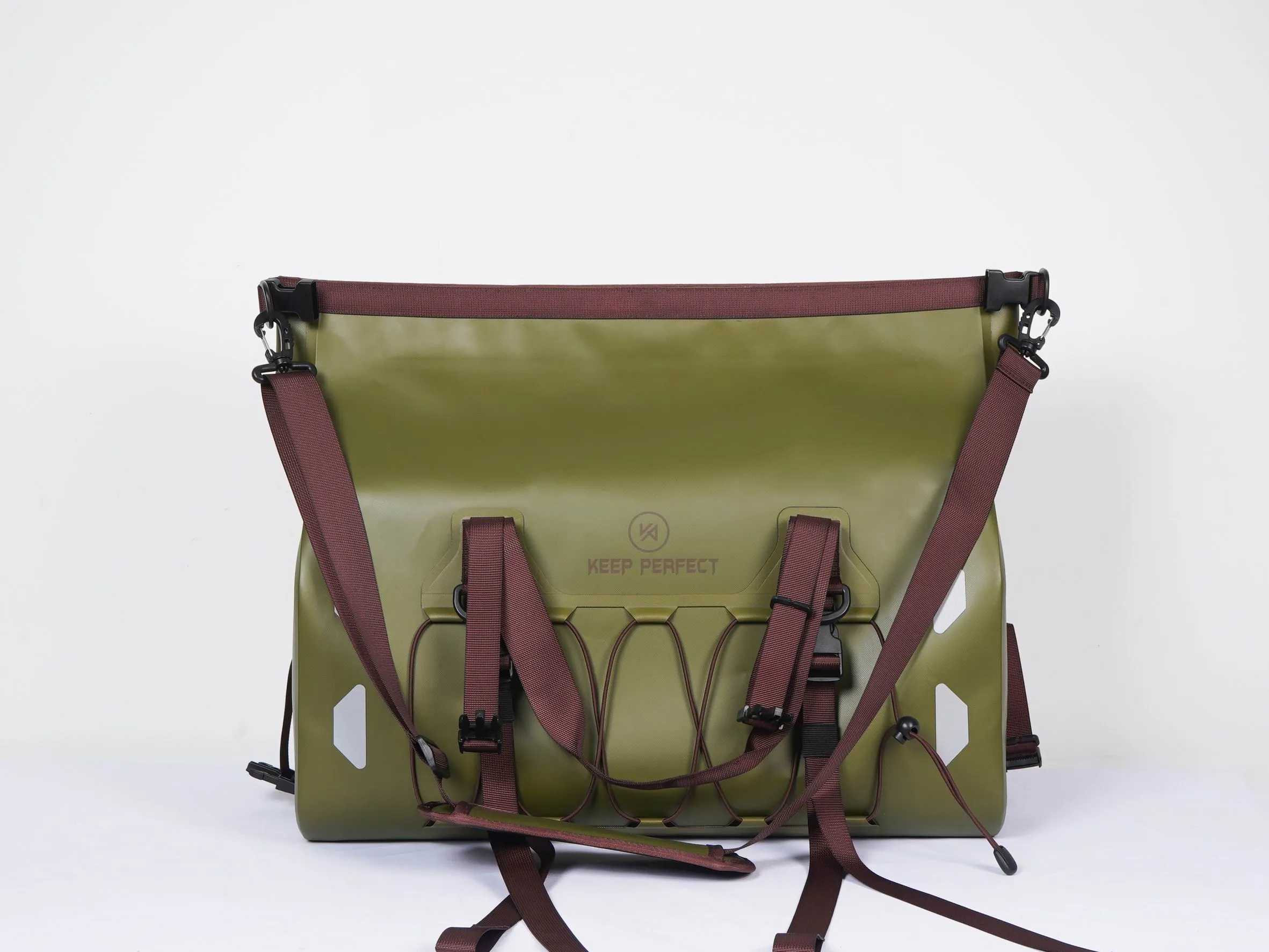
People searching for "how long do dry bags last" usually want a direct, practical answer - and this page delivers one. This guide explains what a dry bag is, how it works, the materials and closures that matter, and how to choose, use and maintain one. It is a plain-English primer for anyone new to dry bags or looking to buy smarter.
What shortens lifespan
UV exposure, salt, sand, sharp gear, heat and being stored wet or tightly rolled all age a dry bag. A bag left in a hot car trunk or full sun will fail years before one stored loose and shaded.
Signs it is wearing out
Cracking film, peeling seams, a zipper that no longer seals, and a leak test that fails after a repair are all signs to replace. Inspect before every trip and after any hard use.
What the term actually means
A dry bag is a soft-sided container designed to keep its contents dry when the bag is splashed, rained on, briefly dropped in water or submerged. Unlike a standard backpack or duffel, it seals at the opening rather than relying on a fabric flap.
The two features that define a dry bag are a waterproof body with no needle holes that leak, and a watertight closure. Everything else - straps, valves, windows and colors - is secondary to those two functions.
Sizes and what fits in each
A dry bag is labeled by liters, but capacity is approximate because the roll-top eats a few centimeters of usable length. As a rule, size up for bulky gear and down for a compact packable layer.
Use 2-5L for phone and valuables, 10-15L for day trips, 20-30L for overnight gear, and 40-60L for multi-day expeditions. Match the size to the gear, not to the label.
Why the closure matters most
A dry bag is only as good as its closure. A roll-top must be rolled three to five times tightly and clipped; a zipper must be fully closed with the slider seated; a clip must be snapped on both sides. Most leaks are user error, not product failure.
For this reason, factories test closures as carefully as fabric. A reliable buckle, a smooth watertight zipper and clear closure instructions are worth more than a thicker film if the closure lets water past.
Materials at a glance
The three main dry bag materials are TPU, PVC and coated nylon. TPU is light, flexible and UV-stable; PVC is heavy, puncture-resistant and cheap; coated nylon is the lightest and most packable.
The material sets the cost, weight and cold-weather behavior. PVC stiffens in cold, while TPU stays flexible; nylon's coating can wear with abrasion. Choose by use case and budget rather than by marketing claims.
How to test one at home
You can test a dry bag at home in minutes: place a dry paper towel inside, seal the bag, and submerge it briefly in a sink or tub. Open it and confirm the towel is still dry, or squeeze the sealed bag underwater and watch for bubbles.
Test before every trip that involves electronics or important documents. A two-minute leak check is far cheaper than replacing a phone or passport.
Key terms to know
When you shop for a dry bag, you will see a handful of repeated terms. IPX7 and IPX8 describe waterproof ratings; TPU, PVC and coated nylon describe materials; and MOQ describes the minimum order quantity if you are buying in bulk.
Other useful terms include RF welding (fusing seams with radio frequency), watertight zipper, roll-top, D-ring, purge valve and dry sack. Knowing them makes it easier to compare products and to speak the same language as a supplier.
| Material | Durability | Weakness |
|---|---|---|
| PVC | Highest | Stiffens in cold |
| TPU | High | Softer, can puncture |
| Coated nylon | Good | Coating wears |
| Size | Typical use | Example contents |
|---|---|---|
| 2L-5L | Phone and valuables | Phone, wallet, keys, passport |
| 10L-15L | Day trips | Jacket, lunch, towel, camera |
| 20L-30L | Overnight / kayak deck | Sleeping bag, clothes, food |
| 40L-60L | Multi-day expedition | Sleep system + clothing |
| Factor | Roll-top | Zipper |
|---|---|---|
| Closure | Roll 3+ times + buckle | Watertight zipper |
| Waterproofing | Highest (IPX8 capable) | High (IPX7/IPX8) |
| Access speed | Medium | Fast |
| Cost | Lower | Higher |
| Best for | Kayaking, rafting | Deck bags, quick access |
| Question | Short answer |
|---|---|
| Is it waterproof? | Yes, when closed correctly |
| Does it float? | Usually, with trapped air |
| Best material? | Depends on use and budget |
| Right size? | Match liters to your gear |
| Lifespan? | Many seasons with care |
| Do | Don't |
|---|---|
| Roll 3-5 times | Overpack the top |
| Rinse after saltwater | Machine wash |
| Air-dry fully | Store wet |
| Test before electronics | Assume it never leaks |
What wears out first on a dry bag
When buyers want to see this on a real line, JUNYUAN BAGS opens its Quanzhou factory for a live walkthrough.For a working dry bag over its service life, failure almost never starts in the film itself; it starts at the stress points. The roll-top flange flexes thousands of times and eventually stiffens, buckles and clips suffer impact and salt corrosion, and the welded corners take the brunt of abrasion against rocks and decks. UV exposure then accelerates all of these by oxidising the film surface until it chalks and becomes brittle. Understanding which part wears tells you what to inspect and what to upgrade.
Film thickness is the main longevity lever: 0.7mm marine film survives roughly two to three times more abrasion cycles than 0.35mm ultralight film before pinholes appear. If your bag lives on a rocky shore or a boat deck, the thicker gauge pays for itself; if it lives in a hiking pack on smooth trails, the lighter gauge is the wiser weight trade.
Use case | Gauge | Expected life |
|---|---|---|
Occasional beach / rain | 0.35-0.5mm | 3-5 seasons |
Regular paddling | 0.5mm | 4-6 seasons |
Daily marine / deck | 0.7mm | 5-8 seasons |
Baked in sun on deck | any | reduced ~50% |
How UV and temperature age the film
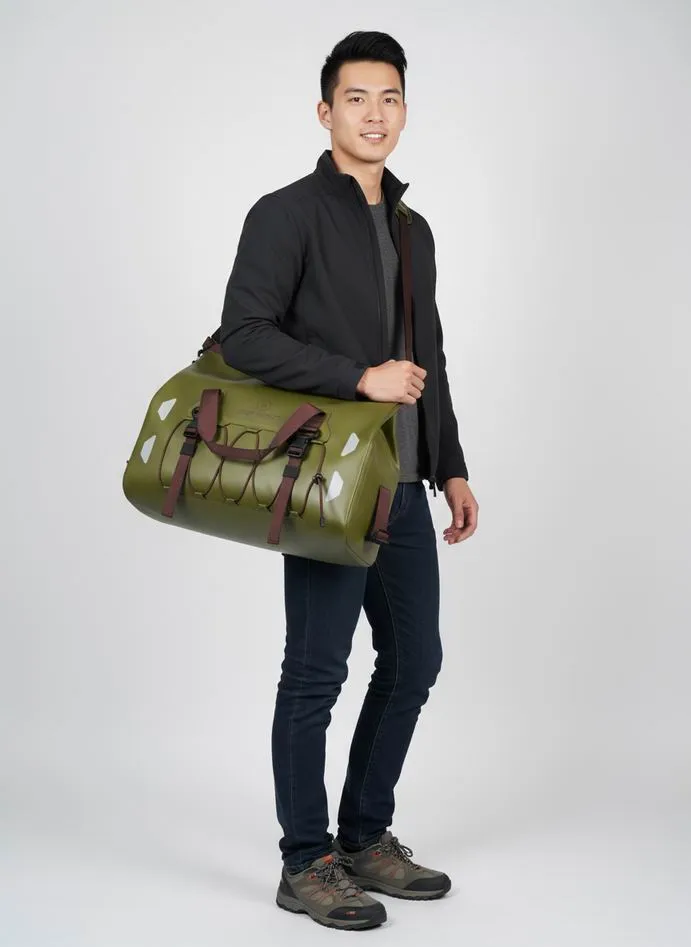
Ultraviolet light is the quiet killer. Accelerated xenon-arc testing shows untreated PVC and coated nylon can lose 30-50% of their tensile strength after a few hundred hours of UV exposure, which is why bags left on a dashboard or boat deck fail earlier even if they never took on water. TPU with UV stabilisers fares noticeably better, and light colours absorb less radiant heat than black ones. Temperature adds a second dimension. Cold makes PVC stiff and crack-prone below about -10 degrees Celsius, while TPU stays flexible to roughly -30 to -40 degrees. In a hot car boot, both materials cycle between expansion and contraction that works seams loose. The takeaway: store shaded and cool, and spec UV-stabilised film for any bag that will live outdoors in sun.
Inspection habits that catch failure early
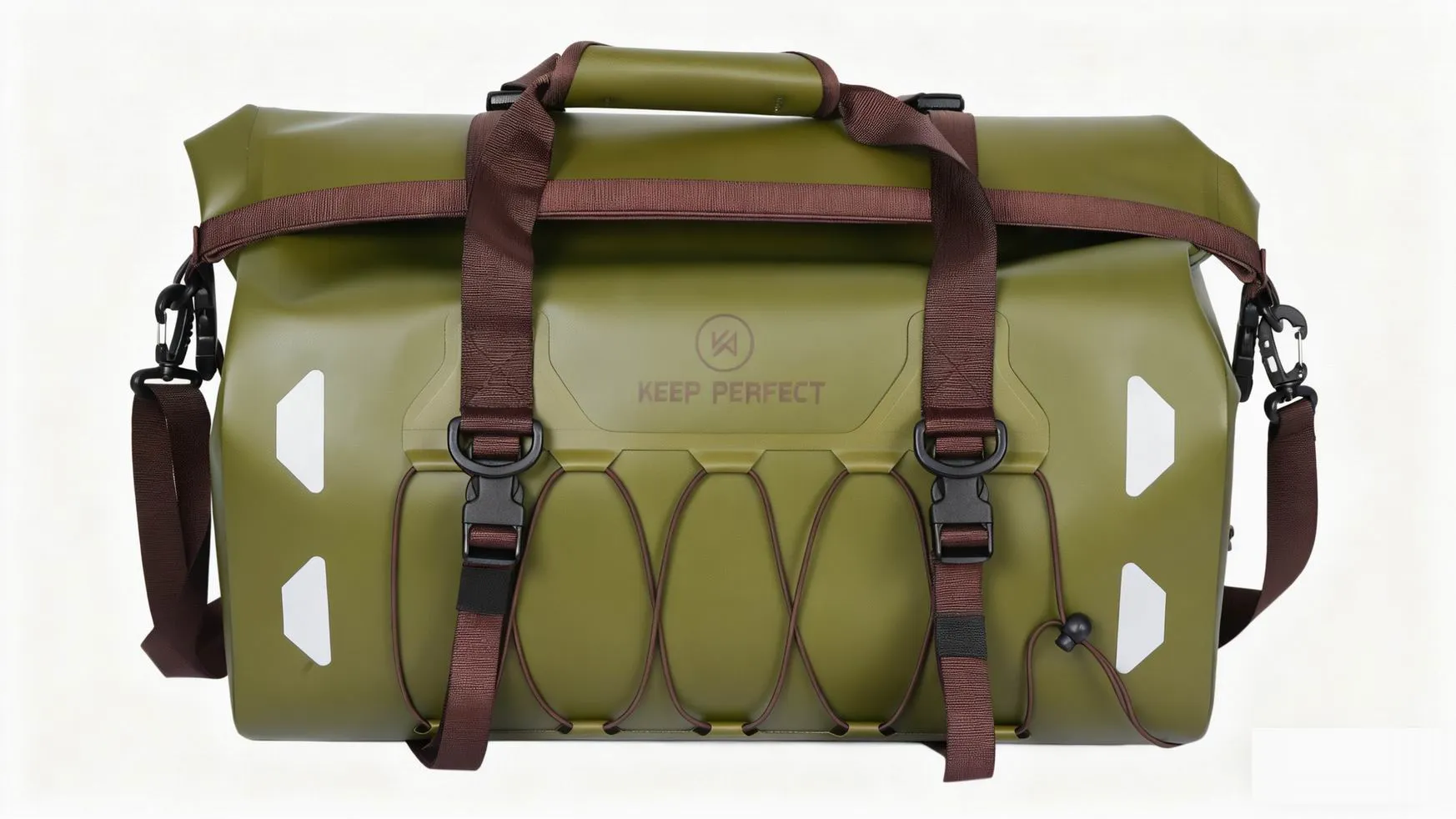
A 60-second pre-trip inspection prevents a soaked-bag disaster. Squeeze the closed bag and feel for firmness; slowly inflate it and listen for hissing along the welds; run a finger over the flange for tiny pinholes; check that the buckle still snaps firmly and the webbing is not fraying. Do this at home, not on the shore. Catching a 2mm pinhole early means a two-dollar patch; catching it mid-trip means a waterlogged phone. Keep a small patch kit (TPU/PVC patches and adhesive) in the bag itself so field repairs are possible. Mark any repaired spots and re-test them in a sink. A repaired bag is fine for spare clothes but should be retired from duty carrying irreplaceable electronics.
Choosing for longevity at purchase
You buy durability at the spec stage, not after. Pick a gauge matched to abrasion, choose TPU for cold or UV-heavy environments, prefer welded seams over sewn-and-taped, and fit metal or quality composite buckles rather than thin plastic. Ask the factory for the film's UV-ageing hours and operating temperature range on the spec sheet, and run a pre-production sample so you can flex and bend the real material before ordering hundreds. A slightly heavier, thicker bag that survives six seasons beats a featherweight bag that cracks after two. When you order in volume, the per-unit cost difference between 0.5mm and 0.7mm is small relative to the warranty and return cost of early failures - which is why serious outdoor brands spec conservatively.
When to upgrade the spec
Watch your own failure rate to decide when to move up a gauge. If customers report pinholes after a season, your film is too thin for their use - step the next run from 0.35mm to 0.5mm or from 0.5mm to 0.7mm. If bags return stiff and cracked, UV exposure is the culprit: switch to UV-stabilised film and lighter colours that absorb less heat. If returns cluster at the buckle, upgrade the hardware rather than the film.
The cost difference is small against the warranty. A 0.5mm to 0.7mm step adds modest film cost but roughly triples abrasion life and slashes the return rate. Buyers who spec conservatively at the start - gauge for abrasion, TPU for cold, UV film for sun - avoid the expensive cycle of cheap quotes, early failures and replacement shipments. Durability is bought on the spec sheet, not repaired under warranty.
Signs the film is nearing end of life
Film ages in visible stages, and recognising them stops a surprise soak. Early signs are a slightly chalky or dull surface and a bag that feels stiffer when folded - that is UV beginning to oxidise the film. Next comes tiny surface cracks (crazing) in flex zones, especially along the roll flange and folded corners. Final failure is pinholes appearing along welds or a seam that peels when flexed. Once crazing spreads across the body, patches will no longer stick reliably.
Inspect before each season: flex the film, run a finger along the weld beads, and re-run the sink test. A bag with surface chalk but no pinholes is fine for spare clothes; retire it from electronics duty. Store shaded, rinse after saltwater use, and avoid hot car boots to slow the process. A quality 0.5mm bag treated well lasts four to six seasons; left baking on deck it may last two. The film tells you when it is done - just check.
Why these production numbers matter
For buyers evaluating this at production scale, the numbers that matter are concrete: a dedicated Quanzhou dry bag line running since 2014, a 4,950 square-metre facility on 7 production lines with 149 welding and sewing machines and about 137 trained operators, outputting roughly 200,000 pieces a month as verified by an SGS audit. Quality is backed by BSCI and ISO9001 systems, and finished orders ship DDP to over 100 countries. Those audited figures are what turn a well-written spec sheet into a repeatable supply of bags that actually keep gear dry, batch after batch, rather than a one-off sample that cannot be reproduced. For an importer, that repeatability is the difference between a launch that reorders smoothly and one that spends its first year chasing leaks and replacements.
People also ask
What is the difference between waterproof and water resistant?
Waterproof means it keeps water out under submersion or jets; water resistant means it resists light rain and splashes but will leak under pressure or immersion.
What is the difference between TPU and PVC dry bags?
TPU is lighter, softer and more UV-stable; PVC is heavier, more puncture-resistant and cheaper. TPU suits premium packable bags; PVC suits rugged, high-volume bags.
Can you put a phone in a dry bag?
Yes, using a dedicated phone dry bag or a padded roll-top bag. Test the bag first and add padding for impact protection.
What does IPX8 mean on a dry bag?
IPX8 means the bag survives continuous immersion beyond 1 meter under manufacturer-specified conditions. The depth and duration are only meaningful if stated.
What are the different types of dry bags?
Roll-top, zipper, backpack, tote, phone, floating, waist pack, duffel and pouch styles, each built for a different activity and access need.
What is the difference between a dry bag and a dry sack?
They are the same product. Dry sack is the more common British and outdoor-store term, while dry bag is used more in the US.
How many rolls should a dry bag have?
Three to five tight rolls is the standard for a reliable seal. Fewer rolls can leak; more rolls are safe but reduce usable capacity.
What is the difference between a dry bag and a backpack?
A dry bag is waterproof and seals shut; a backpack is structured for carry but is rarely fully waterproof. A dry bag backpack combines both.
Key takeaways
- Choose dry bag by fixing the activity, size, material and closure before comparing options.
- Verify waterproofing with a stated IPX rating and a real test method, not a label.
- For bulk orders, confirm MOQ, lead time and a pre-production sample before committing.
- Match material to conditions: TPU for cold and UV, PVC for abrasion, coated nylon for weight.
- A physical pre-production sample is the only reliable way to lock material, color and printing.
- Store dry bags loose and shaded, and re-test the seal before trusting them with electronics.
Related guides
- What is a dry bag?
- Dry bag materials: TPU vs PVC vs nylon
- IPX / IP68 waterproof ratings
- Types of dry bags
- OEM dry bags
Step by step
- Identify what must stay dry and how wet the conditions will be.
- Choose a size that fits the gear with room left to roll the top.
- Pick a material - TPU, PVC or coated nylon - matched to the conditions.
- Close the bag correctly and test it with a paper towel before trusting it.
Specification checklist
- Fix the specification first - material, size, closure, printing and packaging - so quotes are comparable.
- Verify waterproofing with a stated IPX rating and a real test method, and confirm the batch sampling plan.
- Order a pre-production sample and approve it before bulk production begins.
- Confirm MOQ, lead time, payment terms and the correct HS code before you commit.
- Match the material to the conditions: TPU for cold and UV, PVC for abrasion, coated nylon for weight.
- Ask for a dated test report and a pre-shipment inspection (AQL) for waterproofing and seams.
- Keep the most valuable items in an inner pouch as a second layer of protection.
- Rinse, dry and store the bag correctly to extend its lifespan season after season.
Bottom line
The bottom line is simple: a dry bag is only as good as its closure and seams, and correct use matters as much as construction. Pick the right size, close it properly, and test it before trusting electronics. Once you understand those basics, every other buying decision becomes much easier. For "how long do dry bags last", this is the summary that matters most.
Frequently Asked Questions
Q1. What is the difference between waterproof and water resistant?
Waterproof means it keeps water out under submersion or jets; water resistant means it resists light rain and splashes but will leak under pressure or immersion.
Q2. What is the difference between TPU and PVC dry bags?
TPU is lighter, softer and more UV-stable; PVC is heavier, more puncture-resistant and cheaper. TPU suits premium packable bags; PVC suits rugged, high-volume bags.
Q3. Can you put a phone in a dry bag?
Yes, using a dedicated phone dry bag or a padded roll-top bag. Test the bag first and add padding for impact protection.
Q4. What does IPX8 mean on a dry bag?
IPX8 means the bag survives continuous immersion beyond 1 meter under manufacturer-specified conditions. The depth and duration are only meaningful if stated.
Q5. What are the different types of dry bags?
Roll-top, zipper, backpack, tote, phone, floating, waist pack, duffel and pouch styles, each built for a different activity and access need.
Q6. What is the difference between a dry bag and a dry sack?
They are the same product. Dry sack is the more common British and outdoor-store term, while dry bag is used more in the US.
Q7. How many rolls should a dry bag have?
Three to five tight rolls is the standard for a reliable seal. Fewer rolls can leak; more rolls are safe but reduce usable capacity.
Q8. What is the difference between a dry bag and a backpack?
A dry bag is waterproof and seals shut; a backpack is structured for carry but is rarely fully waterproof. A dry bag backpack combines both.
Q9. How are dry bags made?
The body is cut from waterproof film or coated fabric, seams are welded or taped, hardware is attached, and each bag is leak-tested before shipping.
Q10. What is a D-ring on a dry bag?
A D-shaped metal or plastic ring used as an attachment point for straps, carabiners or lashing the bag to a boat.
Q11. Are dry bags safe for electronics?
Yes for water protection, but they do not protect against impact. Use a padded or dedicated electronics dry bag and test it first.
Q12. What is a purge valve?
A one-way valve that lets air escape after rolling, compressing the bag for packability.
Q13. Does dry bag material affect waterproofing?
The material supplies the waterproof barrier, but the closure and seams decide real-world waterproofing. A good film still leaks if seams or closures fail.
Q14. What are the parts of a dry bag?
Body fabric, roll-top or zipper closure, buckle, D-rings or attachment points, straps or handles, and optional purge valve or window.
Q15. Do dry bag liters equal real capacity?
No. Liter ratings are approximate and the roll-top eats a few centimeters of usable length. Treat them as a guide and size up for bulky gear.
Q16. What size dry bag do I need?
Use 2-5L for phone and valuables, 10-15L for day trips, 20-30L for overnight gear, and 40-60L for multi-day expeditions.
Q17. What is a dry bag used for?
A dry bag keeps gear dry during kayaking, boating, camping, fishing, motorcycling, SUP and travel, protecting clothing, electronics, food and sleeping gear.
Q18. What is a dry bag pouch?
A dry bag pouch is a small waterproof organizer for phone, keys, documents or first-aid items, usually with a clip or belt loop.
Q19. Why are some dry bags matte and some glossy?
The finish depends on the film. PVC and glossy TPU reflect light, while matte TPU or coated nylon has a softer, more premium look.
Q20. Are transparent dry bags useful?
Yes. A transparent or windowed dry bag lets you see contents without opening it, which is convenient for travel, events and security checks.